



14 Best Tools for Your Print on Demand Business
Discover the best tools for a print on demand business to design products, manage orders, automate fulfillment, and grow your online store faster.

Dudu
Dec 29, 2025
Last Updated Dec 29, 2025
Image Credit: Toolfolio
Starting a print-on-demand business sounds simple. Pick a design. Sell a product. Let someone else print and ship it.
But once you begin, it gets messy fast. Too many tools. Too many choices. Too many things to manage at once.
You need tools to design products, list them on a store, handle orders, and track what works. The wrong tools waste time and money. The right ones make the business feel light and controllable.
This guide lists the best tools for a print on demand business. Each tool solves a clear problem. No fluff. No extras. Just tools that help you build, run, and grow your store with less effort.
Print on Demand Fulfillment
1. Printify
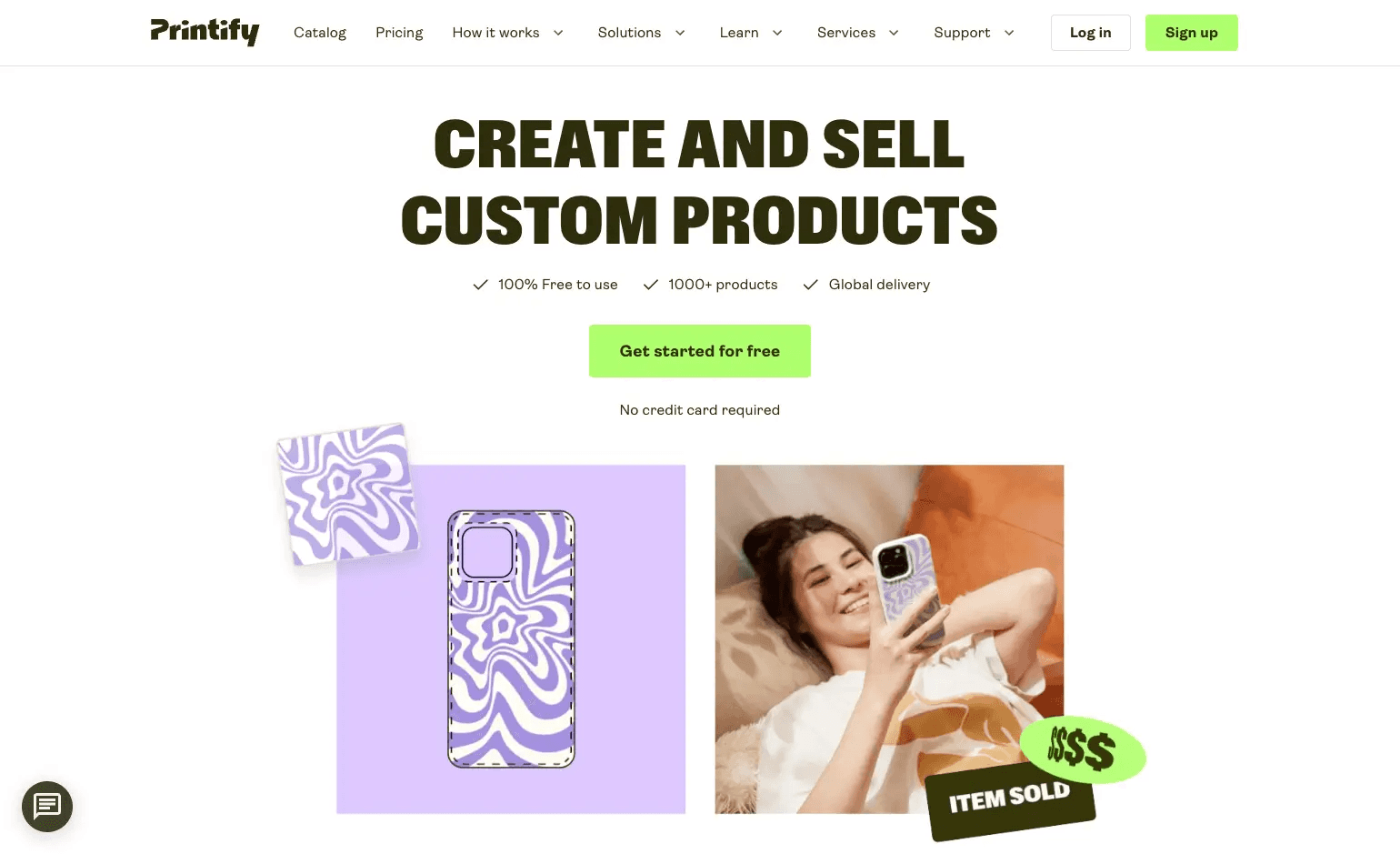
Printify is a print on demand platform that lets you create and sell custom products without upfront cost. You choose from over 1300 products like t-shirts, hoodies, mugs, phone cases, bags, and posters.
You add your design, set your price, and Printify handles printing and delivery. There is no credit card needed to start.
The tool works in three clear steps. First, pick a product from its catalog. Second, add your design using its simple product creator and mockup generator. Third, connect your store and start selling. You control your profit margin. Printify takes care of production, packaging, and shipping through its global partner network.
Printify integrates with major platforms like Shopify, Etsy, WooCommerce, Wix, Amazon, and TikTok Shop. It ships to over 200 countries and has completed more than 60 million orders.
It also offers tools like a profit calculator, bulk orders, branding options, and free learning resources. This makes Printify a strong choice if you want to start or scale a print on demand business with low risk and clear control.
2. Printful
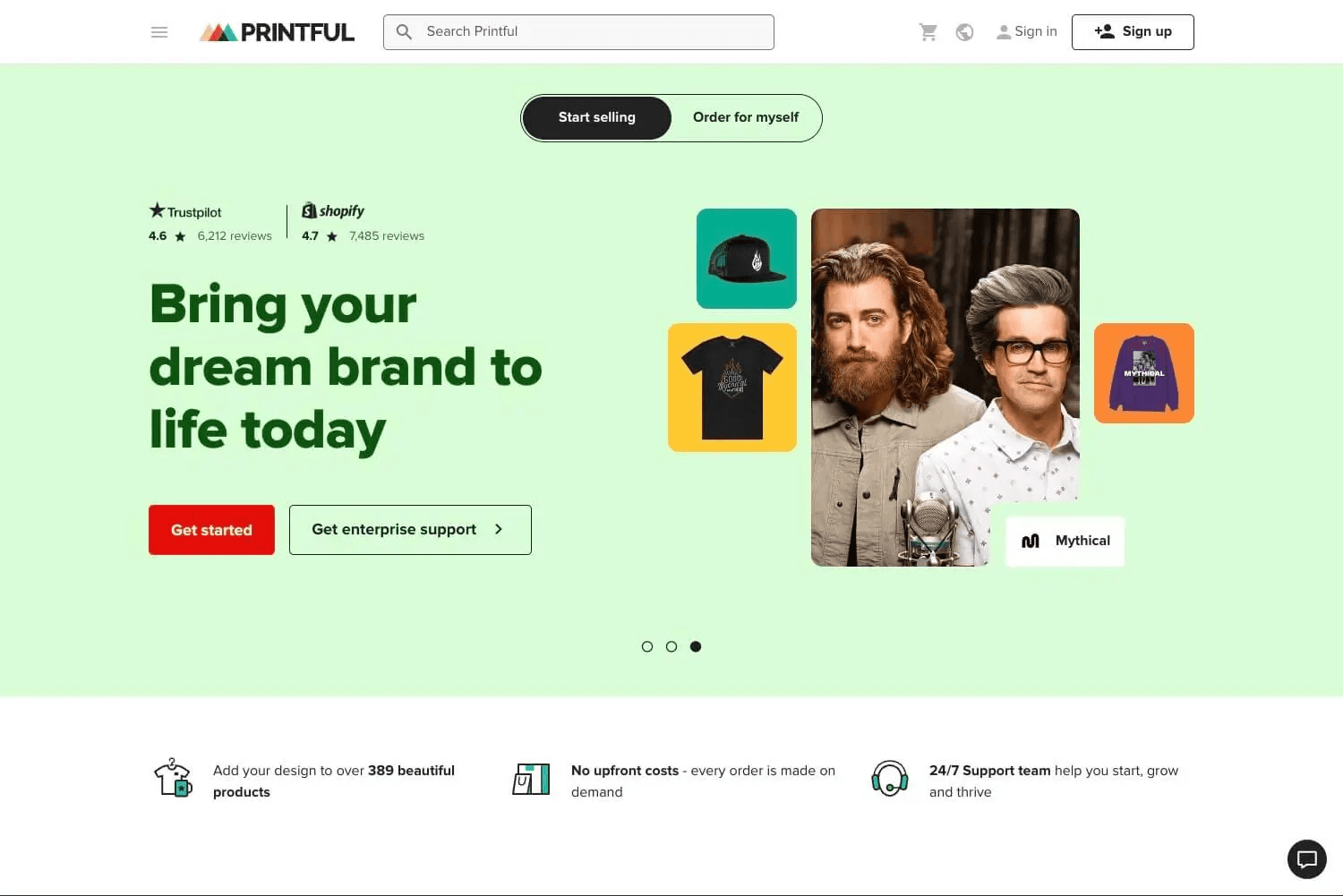
Printful helps you turn your designs into real products and ship them worldwide. You upload your art, choose from a wide product catalog, and sell without holding inventory.
Printful prints, packs, and ships every order for you. This keeps your business simple and hands-off.
Printful focuses heavily on quality and branding. It offers a built-in design maker, premium product options, and custom branding like labels and packing slips. This makes it a good choice if you want your store to feel professional and brand-led, not generic.
The platform connects easily with Shopify, Etsy, WooCommerce, Wix, and more. It has fulfilled over 120 million items since 2013 and is trusted by both small creators and large brands.
3. Gelato
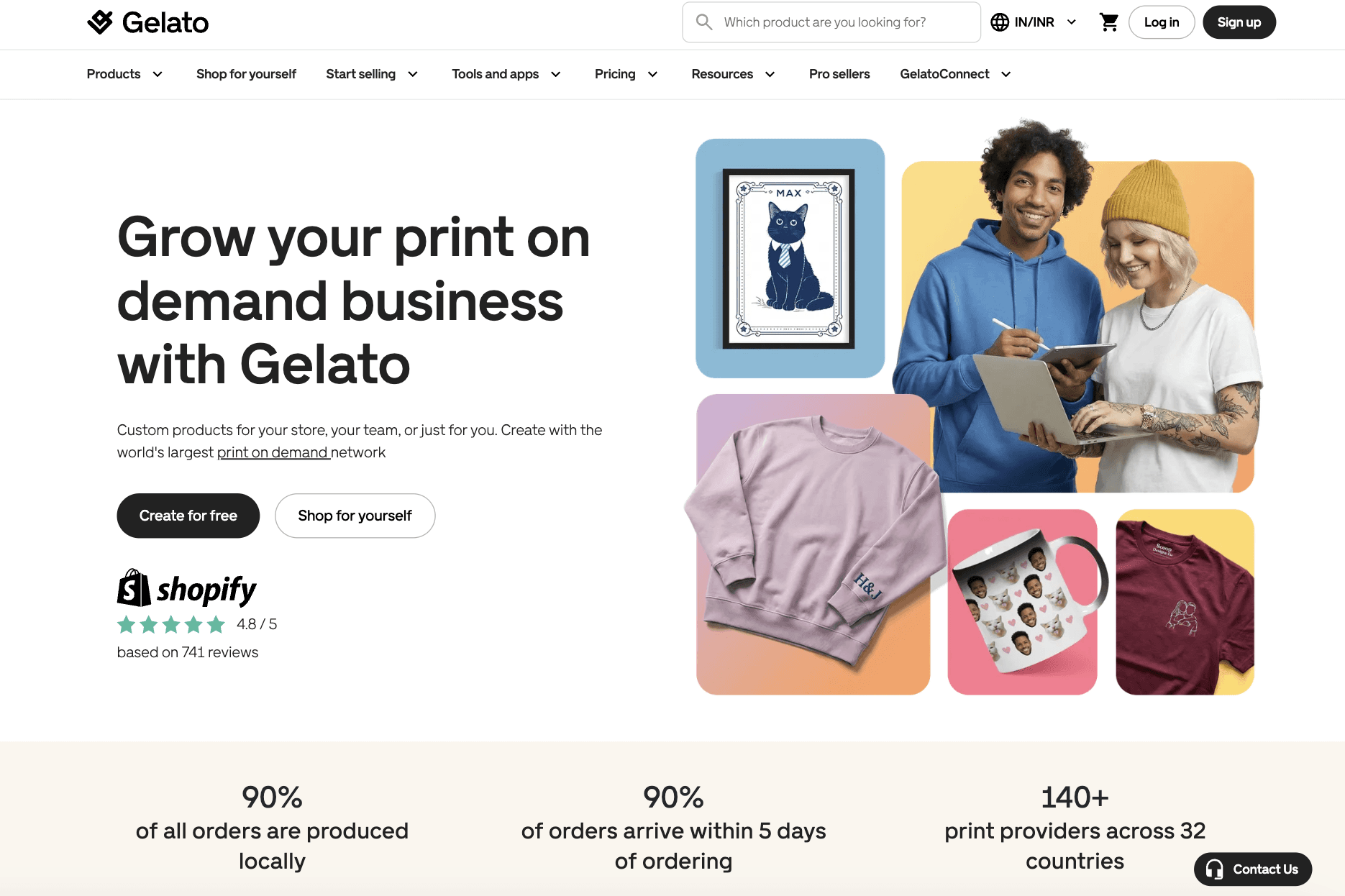
Gelato helps you sell custom products by printing them close to your customers. It uses one of the largest print on demand networks in the world, with local production in over 30 countries. This means faster delivery, lower shipping cost, and fewer delays. Most orders arrive within five days.
Gelato is strong in personalization. Customers can add names, text, or images to products, and Gelato handles the print files automatically. Personalized products often sell for higher prices, which helps increase profit without more work. You can sell items like posters, t-shirts, hoodies, mugs, calendars, and phone cases.
The platform is free to start. You pay only when you get an order. Gelato connects with Shopify, Etsy, WooCommerce, Wix, Squarespace, Amazon, and TikTok Shop. It is a good choice if you want fast global delivery, local production, and strong tools for personalized print on demand products.
POD Design Tools
4. Canva
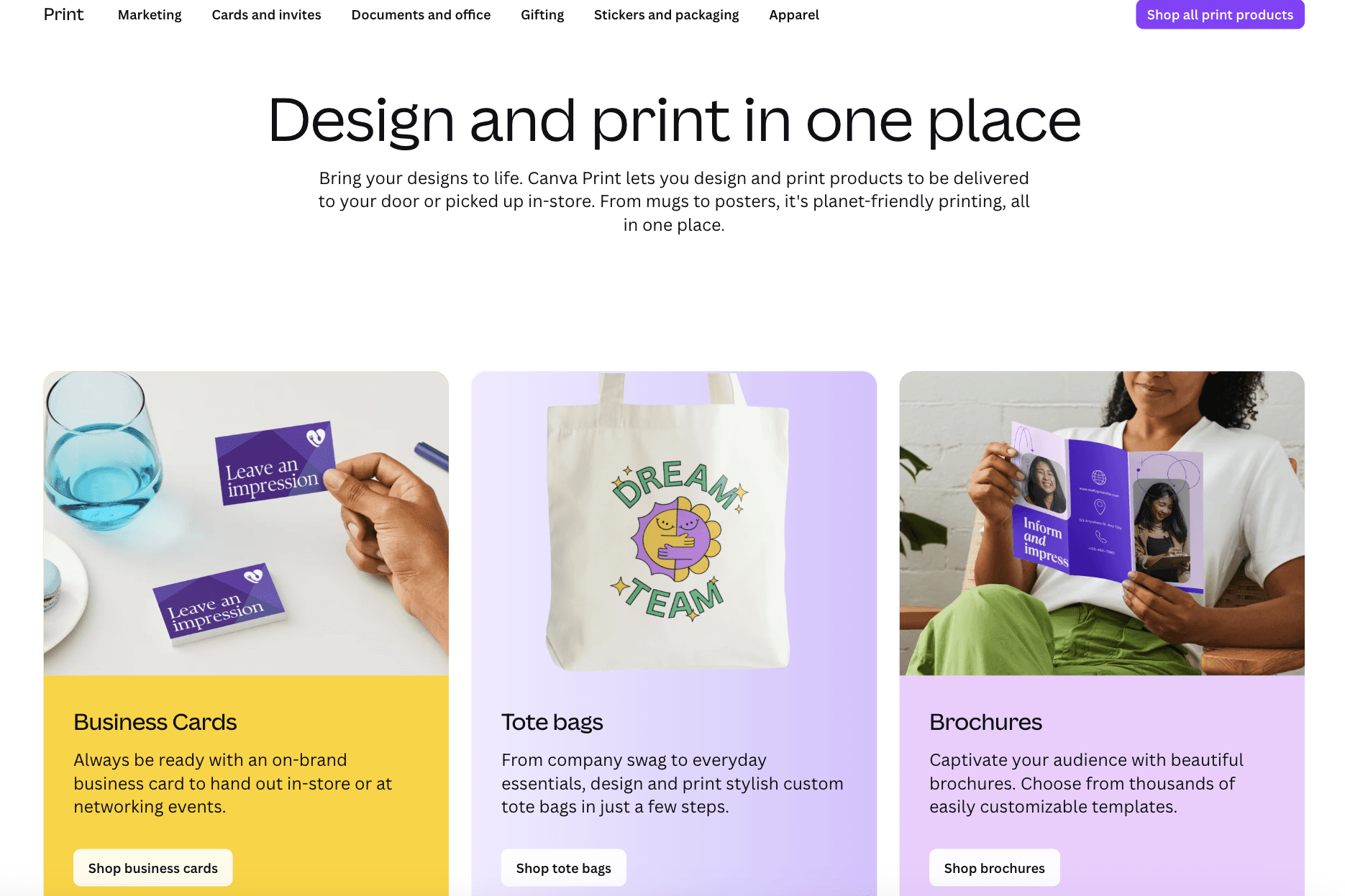
Canva makes design simple for print on demand sellers. You can create designs for t-shirts, mugs, posters, stickers, tote bags, and more without design experience. It offers ready-made templates, drag-and-drop tools, fonts, colors, and images. This helps you move fast and stay consistent with your brand.
Canva also lets you design and print in one place. You can order printed products directly or download files to use with POD platforms like Printify or Printful. Features like background remover, resize tools, and brand kits save time when creating many designs for different products.
Canva is useful for beginners and growing stores. You can start free and upgrade if needed. It works well when you want clean designs, quick mockups, and easy edits without learning complex design software.
5. Glorify
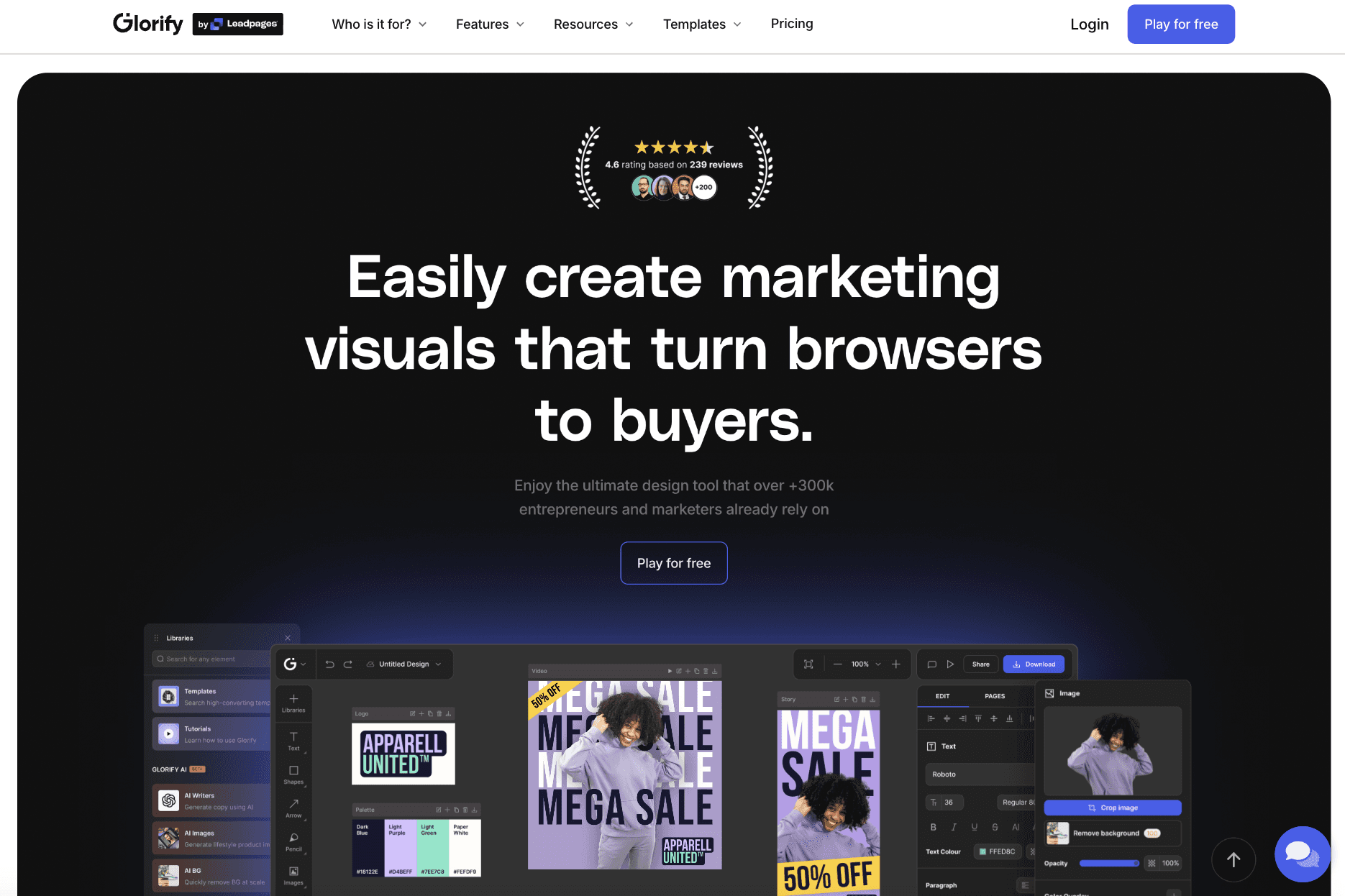
Glorify is a design and mockup tool made for e-commerce and print on demand sellers. It helps you create product images, mockups, ads, and marketing visuals fast. You can pick a mockup, drop in your design, adjust it, and export print-ready files in minutes. No design background needed.
The tool is strong for mockups and product visuals. It offers realistic mockups, shadows, reflections, background removal, and annotation tools. These features help your products look professional on store pages and ads. The infinite canvas lets you work on many designs in one place, which saves time.
Glorify also includes AI tools, brand kits, templates, and team collaboration. You can export files for both digital use and printing. It is useful if you want better product images, clean mockups, and faster design work for your print on demand store.
Online Store Builders
6. Sellfy
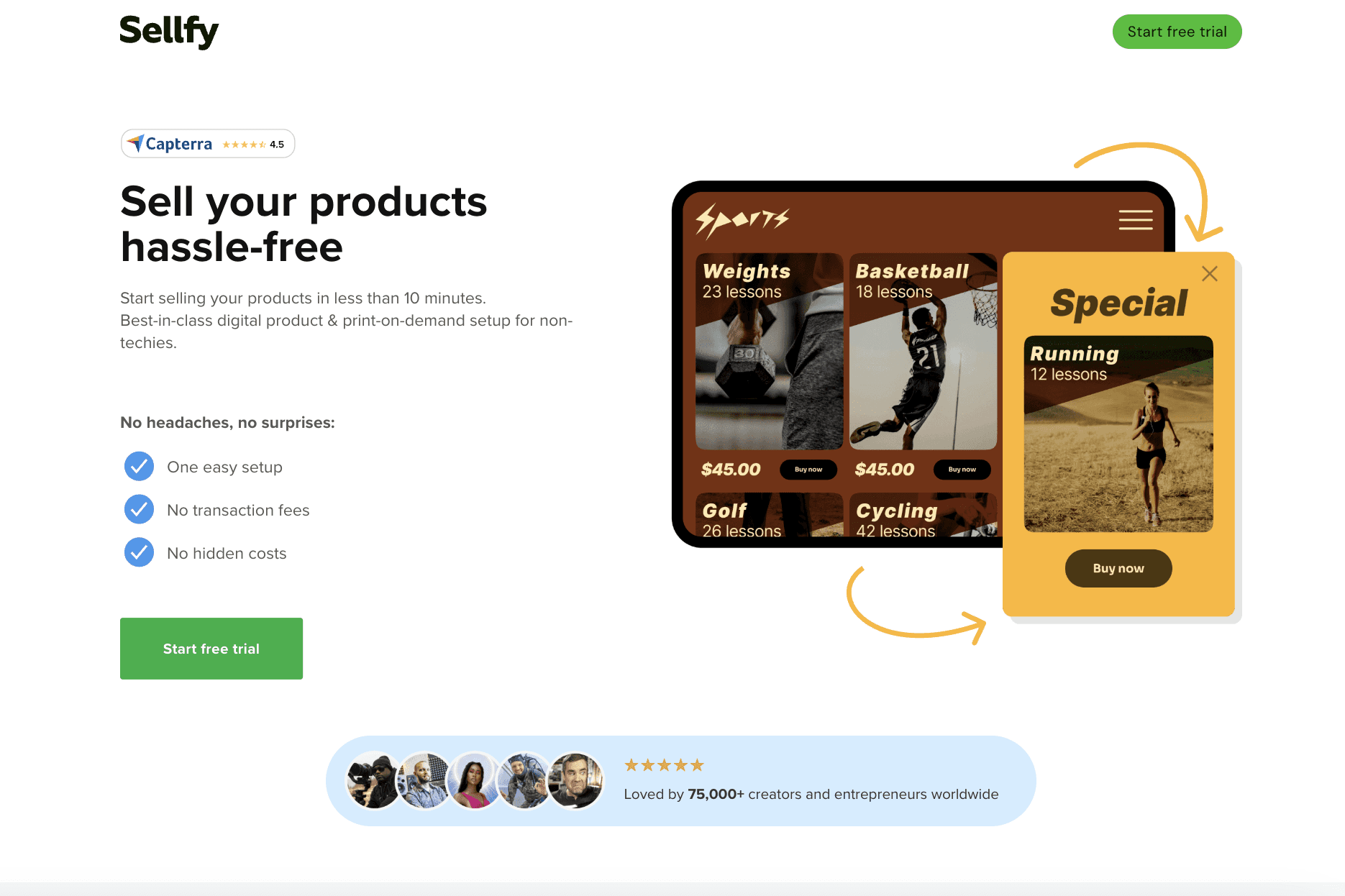
Sellfy is an all-in-one e-commerce platform built for creators who want to sell without tech hassle. It supports print on demand, digital products, subscriptions, and services in one store. You can set up a store in minutes using simple templates and start selling fast.
For print on demand sellers, Sellfy handles the basics well. You upload your designs, list products, and let the platform manage orders. There are no transaction fees, no hidden costs, and no need for extra hosting. This keeps pricing clear and predictable.
Sellfy also includes built-in marketing tools like email campaigns, upsells, and affiliate marketing. It offers 24/7 support and is trusted by thousands of creators. Sellfy works best if you want a simple, clean store without managing many tools or integrations.
Online Store Builders
7. Shopify
Shopify is one of the most popular platforms for running a print on demand business. It lets you create a full online store, manage products, accept payments, and track orders from one dashboard. You can launch fast using ready-made themes or customize everything as your store grows.
Shopify works very well with print on demand tools like Printify, Printful, and Gelato. Orders sync automatically, so when a customer buys, the product gets printed and shipped without manual work. Shopify’s checkout is fast, reliable, and built to convert more visitors into buyers.
It also offers a large app store for marketing, analytics, upsells, and automation. Shopify is best if you want long-term growth, strong integrations, and full control over your print on demand brand.
8. Wix
Wix is a beginner-friendly website builder that also supports print on demand stores. It lets you design your store visually using drag-and-drop tools, without coding. You can sell physical products, print on demand items, digital products, and subscriptions.
Wix includes built-in AI tools for product descriptions, image editing, SEO, and product recommendations. It also supports POD integrations and lets you sell across your website, marketplaces, and social platforms from one place.
Wix is a good choice if you want flexibility in design and an easier setup process. It works well for small to medium print on demand stores that want a clean site without managing many external tools.
SEO/ Analytics/ Research And Competitor Analysis
9. Google Trends
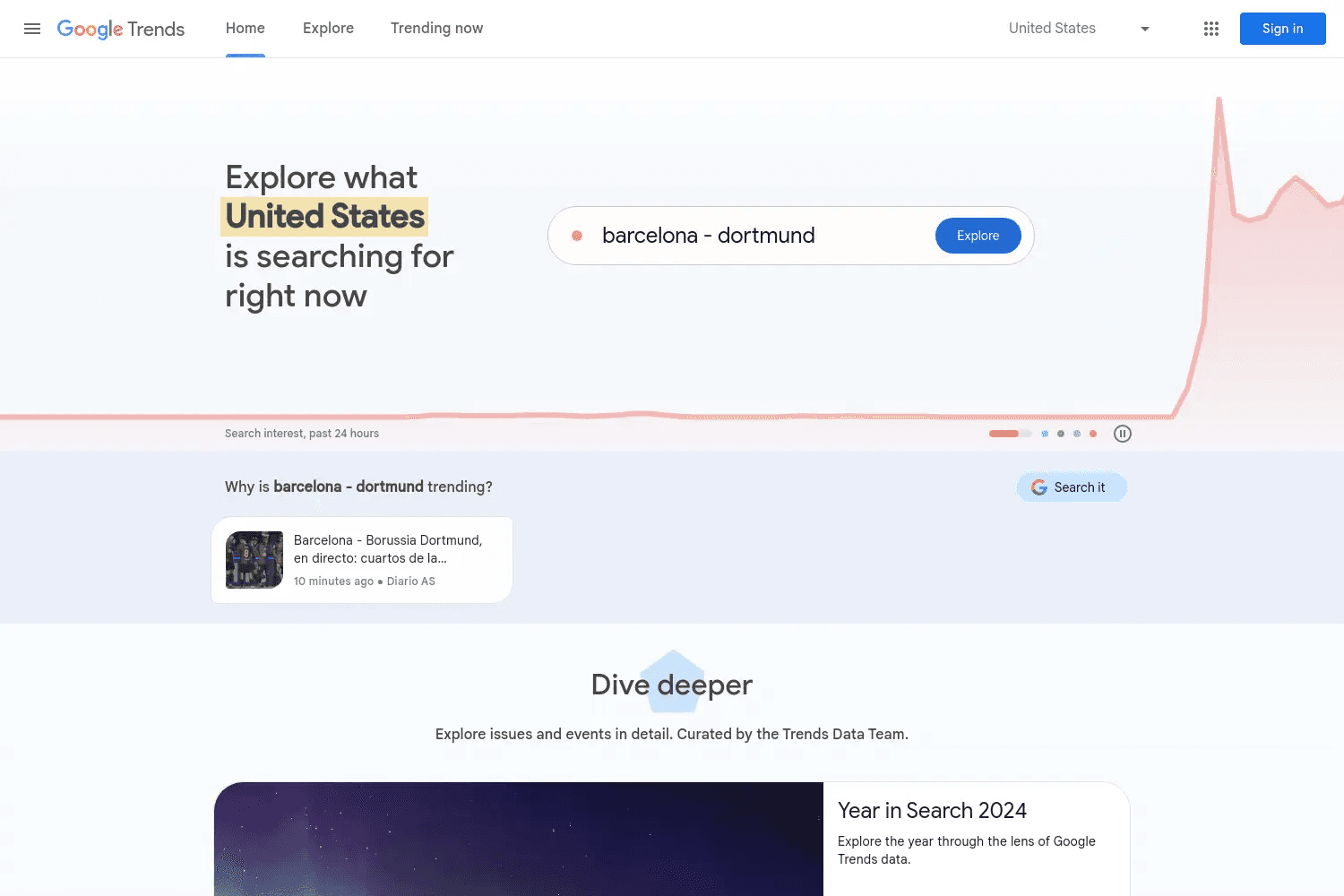
Google Trends shows what people are searching for right now and how interest changes over time. It helps print on demand sellers spot rising topics, seasonal demand, and product ideas before they peak. You can compare keywords, regions, and time ranges to see what is gaining attention.
This tool is useful when choosing niches, slogans, designs, or product types. If searches are growing, demand is likely growing too.
Google Trends is free and simple, which makes it a good first step before investing time or money into a new product idea.
10. Helium 10
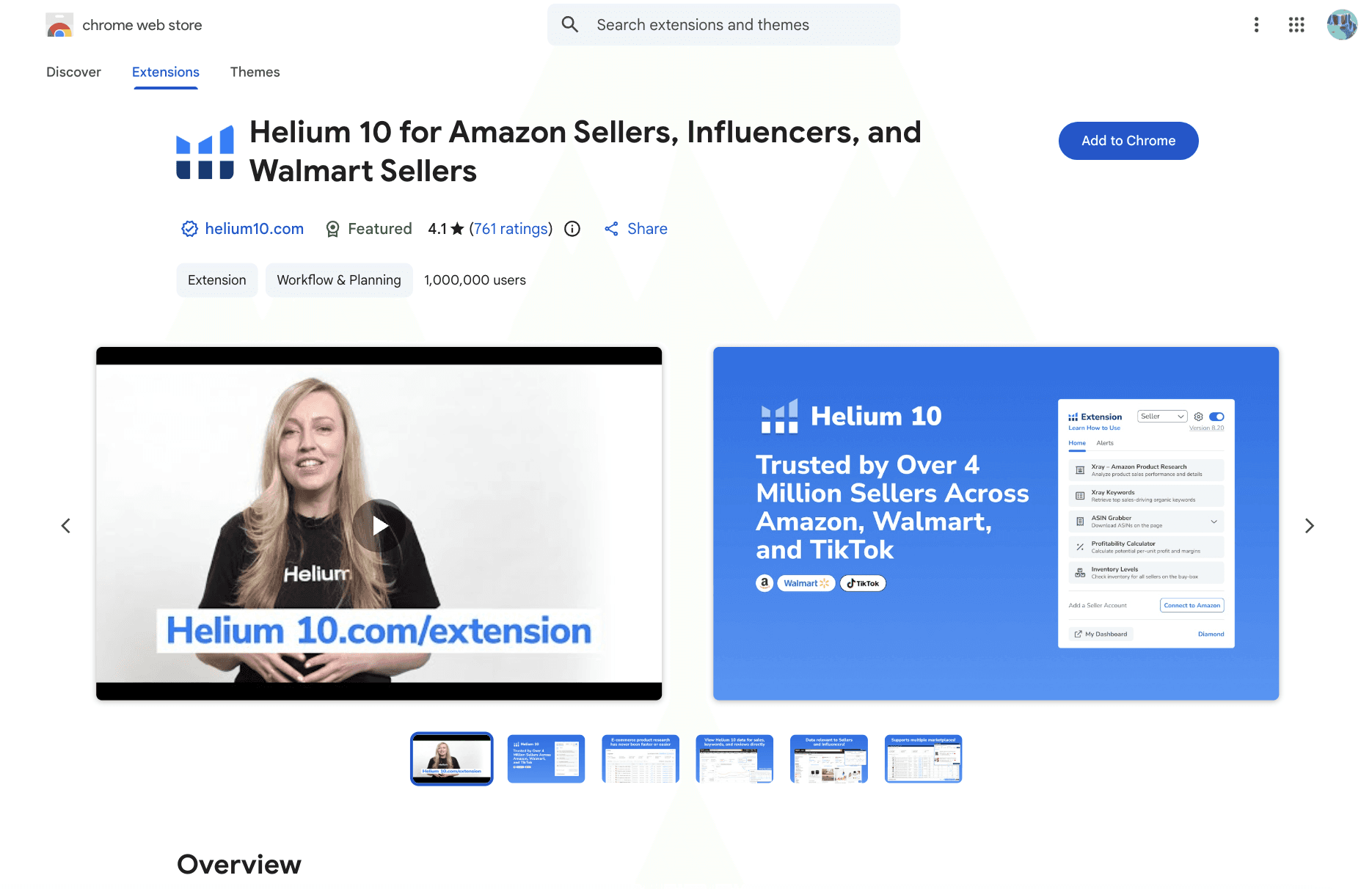
Helium 10 is a research tool mainly built for Amazon sellers, but it is useful for print on demand too. It helps you find products with real demand, strong keywords, and clear profit potential. You can see search volume, competition, and estimated sales data.
For POD sellers, Helium 10 is helpful when selling on Amazon or researching what designs and product types sell well.
It also includes a profit calculator and keyword tools to improve listings. This tool works best if Amazon is part of your sales plan.
11. Koala Inspector
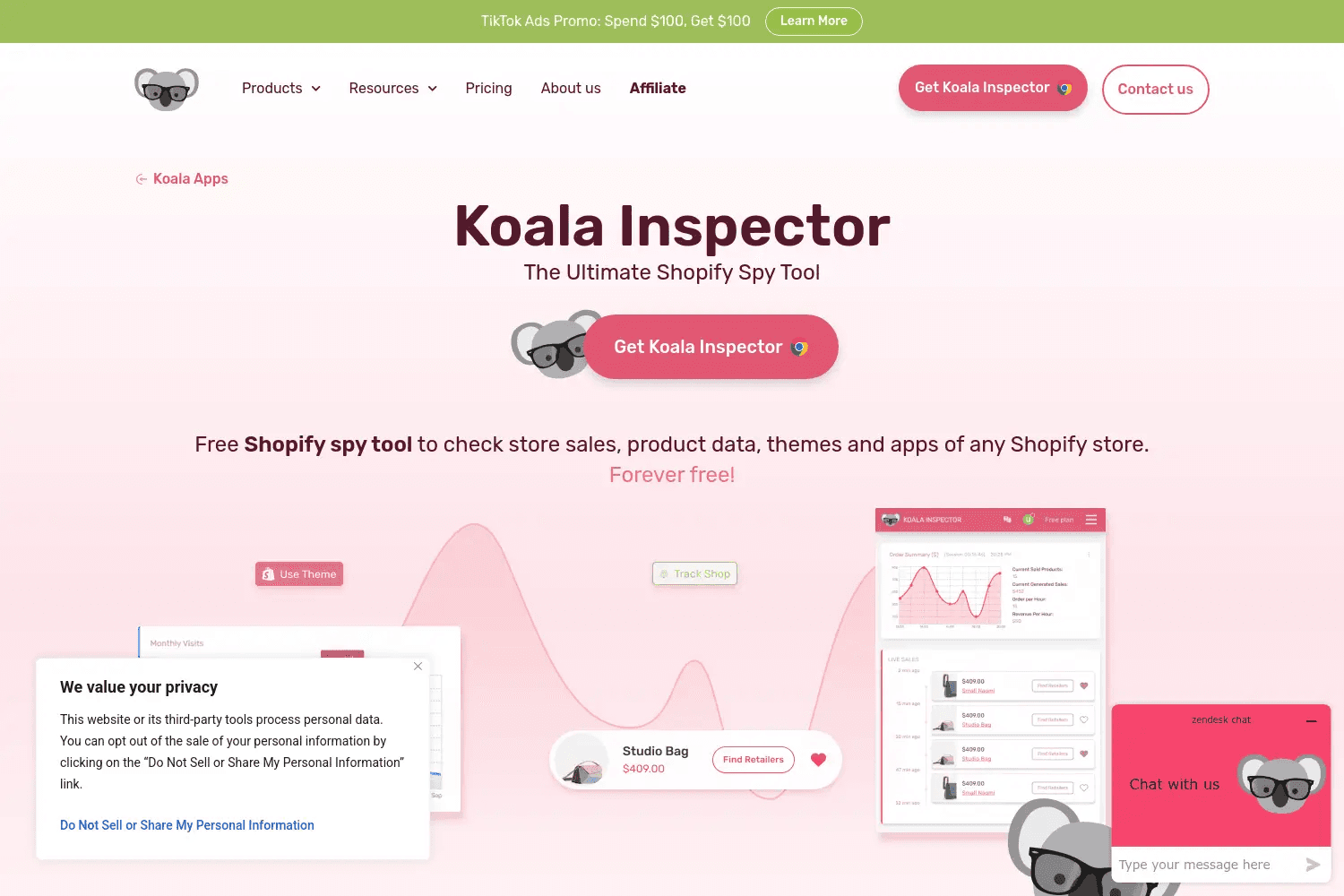
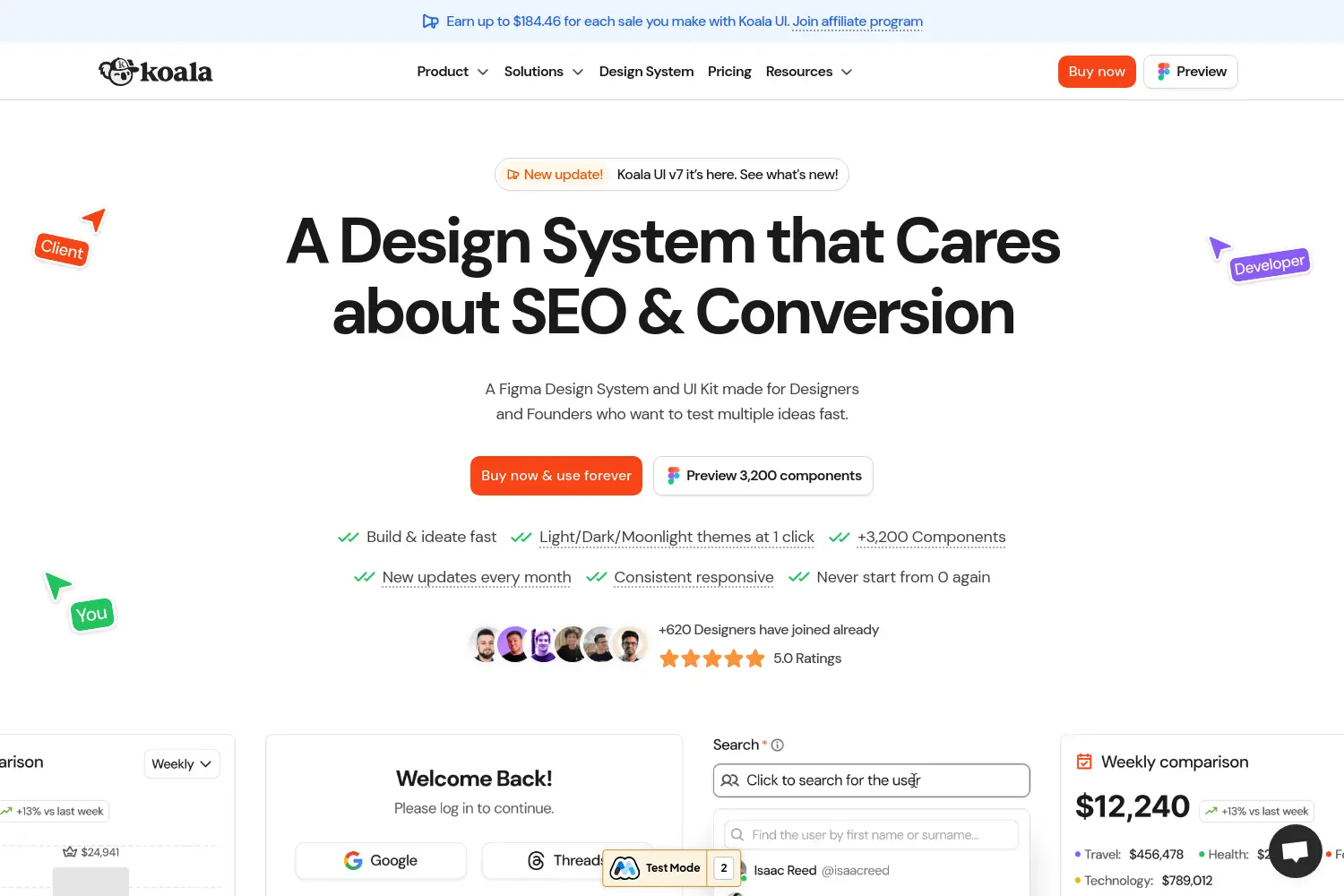
Koala Inspector is a Shopify spy tool that shows what other stores are selling. You can see best-selling products, pricing, themes, apps, and estimated sales of any Shopify store. This helps you understand what works in your niche.
It is useful for product validation and competitor research. Instead of guessing, you can study real stores and spot patterns. Koala Inspector saves time and helps you avoid weak product ideas.
12. Ahrefs
Ahrefs is an SEO and keyword research tool that helps your store get traffic from search. You can find keywords people search for, check competition, and see what pages rank well. This helps you write better product titles, descriptions, and blog content.
For print on demand, Ahrefs is useful if you rely on organic traffic. It helps you find low-competition keywords and track growth over time. This tool is best for sellers who want long-term traffic instead of only paid ads.
Mockup Generators
13. Mocku
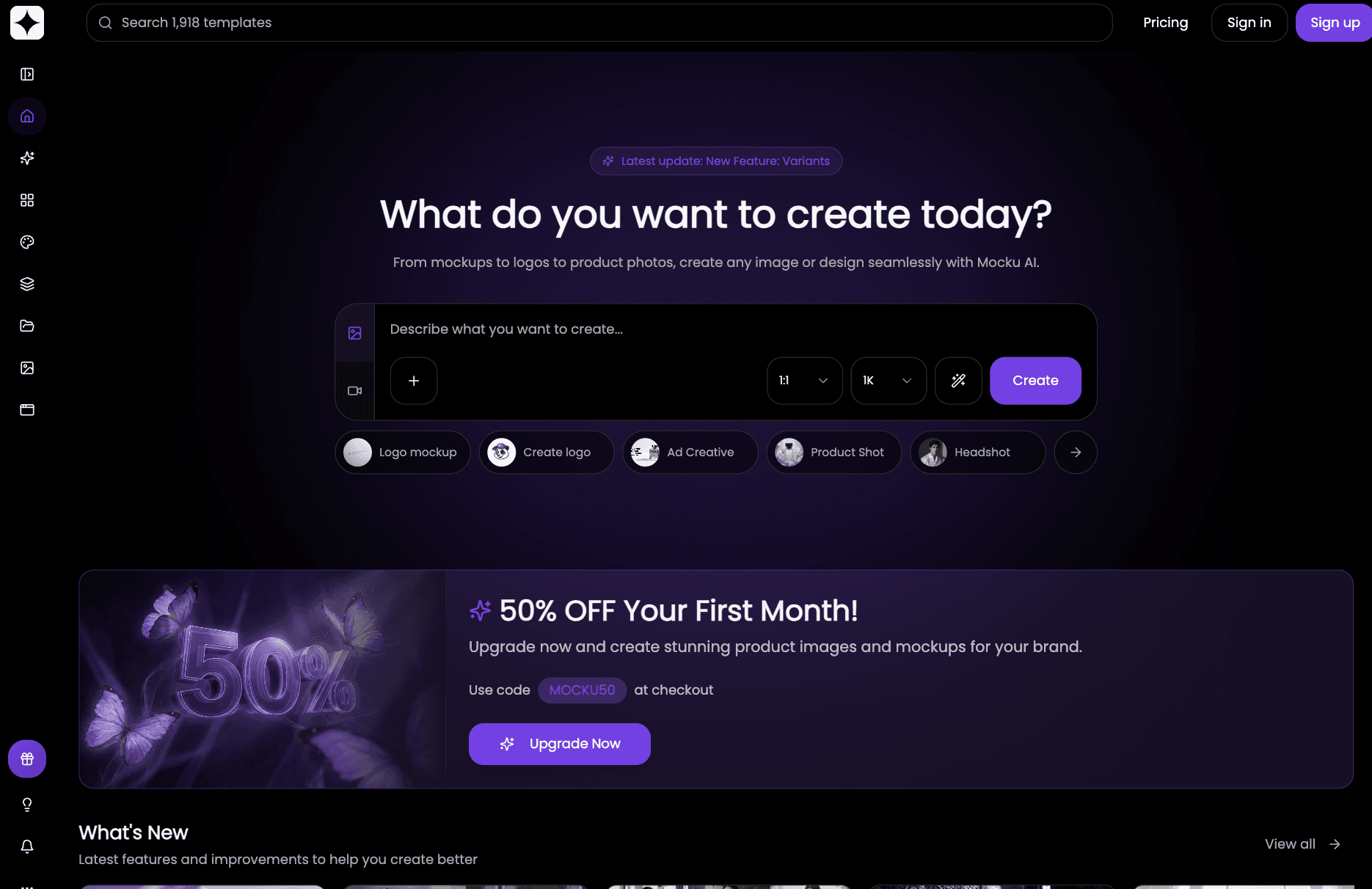
Mocku is an AI-powered mockup tool that helps you create realistic product and device mockups in seconds. You can upload a screenshot, design, or even paste a website URL, then choose a mockup style. The tool turns flat designs into high-quality visuals without any design work.
It offers mockups for apparel, products, packaging, devices, posters, and branding. You can change backgrounds, generate product shots, upscale images, and create variants fast. This is useful for store listings, ads, landing pages, and social posts.
Mocku works well if you want speed and flexibility. It is best for sellers who want clean mockups without learning Photoshop or hiring designers.
14. Dynamic Mockups
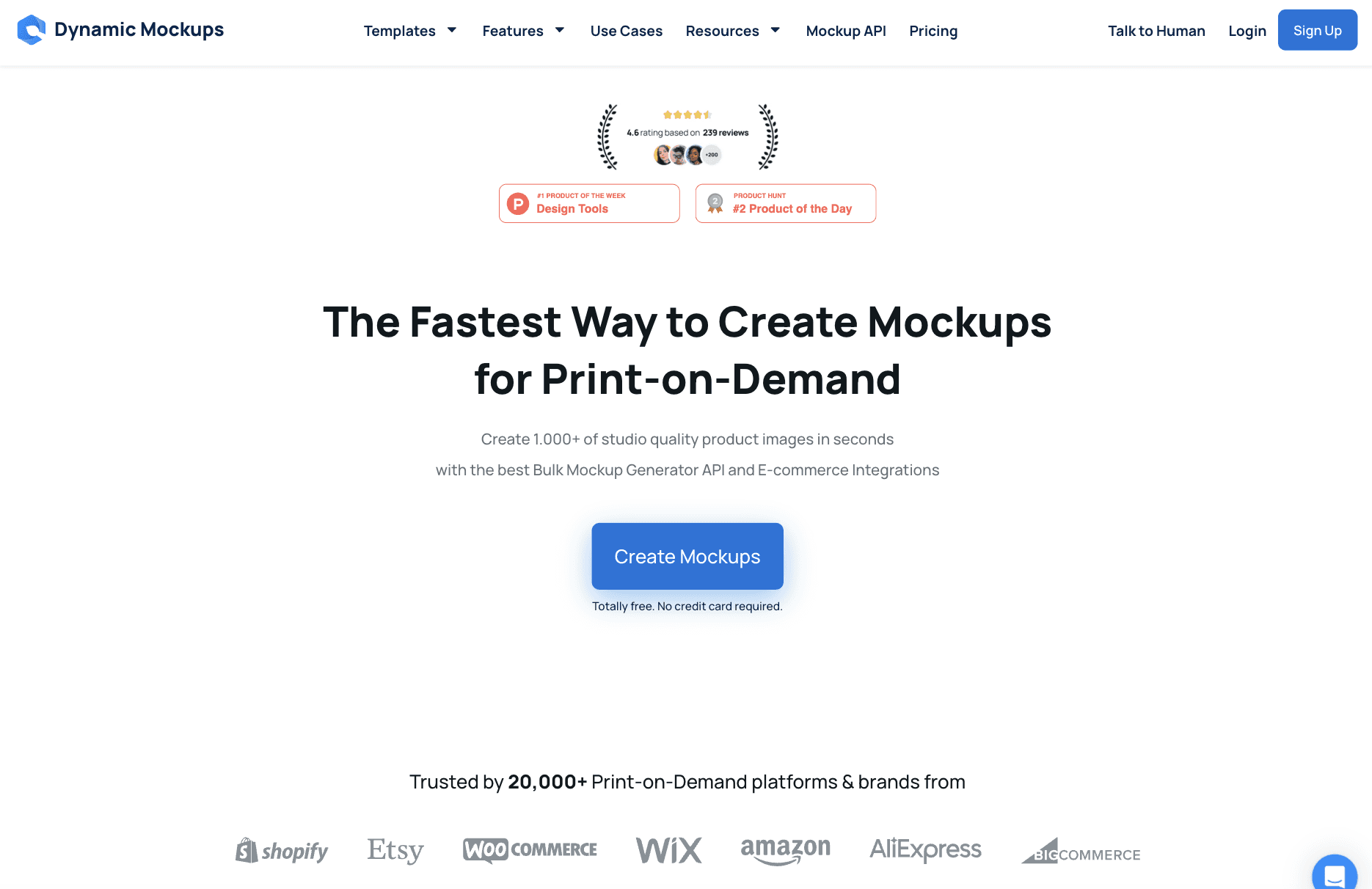
Dynamic Mockups is built for print on demand sellers who need mockups at scale. It lets you generate hundreds or thousands of product images in bulk using ready-made templates or Photoshop files. This saves hours of manual image work.
The tool supports t-shirts, hoodies, mugs, tote bags, wall art, phone cases, and more. It integrates with Shopify, Etsy, WooCommerce, WordPress, and automation tools like Zapier. You can sync mockups directly with listings and keep images updated.
Dynamic Mockups is ideal if you manage many products or variants. It helps improve listing quality, consistency, and conversion without slowing down your workflow.
Wrapping Up
Running a print on demand business gets easier when you use the right tools. From design and mockups to fulfillment, store setup, research, and marketing, each tool in this list solves a clear problem. You do not need all of them on day one.
Start with what you need now, then add more as your store grows.
If you want to go deeper, check out more color and design tools to improve your visuals. Also explore more resources to learn, test, and grow your print on demand business the smart way.
Check out more resources on Toolfolio:
You May Also Like










Featured Tools


Newest Additions










AI Image & Video Generation
















Vibe Coding Library

























Screenshot & Screen Recording Tools