

7 Best AI UGC Video Generators (2026)
Create realistic UGC-style videos with AI. Compare the best tools for ads, ecommerce, and short-form content, without hiring creators.

Dudu
Mar 13, 2026
Last Updated Mar 13, 2026
Image Credit: Toolfolio
Making UGC videos does not scale.
You find creators, explain the product, wait for delivery, then ask for changes. Each video costs money. Each change costs time. When you want more variations, the whole process starts again.
AI UGC video generators change this.
They let you create short, creator-style videos without filming anything. You add a script, select an AI person or voice, and get a video in minutes. This makes it easier to test hooks, angles, and ads without depending on real creators.
The problem is quality.
Some AI UGC tools look real. Others feel fake and break trust in the first second. Picking the right tool matters if you want people to stop scrolling and watch.
In this article, we cover the best AI UGC tools for video generation. We compare them on realism, ease of use, pricing, and where each tool works best. This guide is for marketers, ecommerce brands, and founders who want faster, cheaper UGC videos that actually perform.
1. Veed
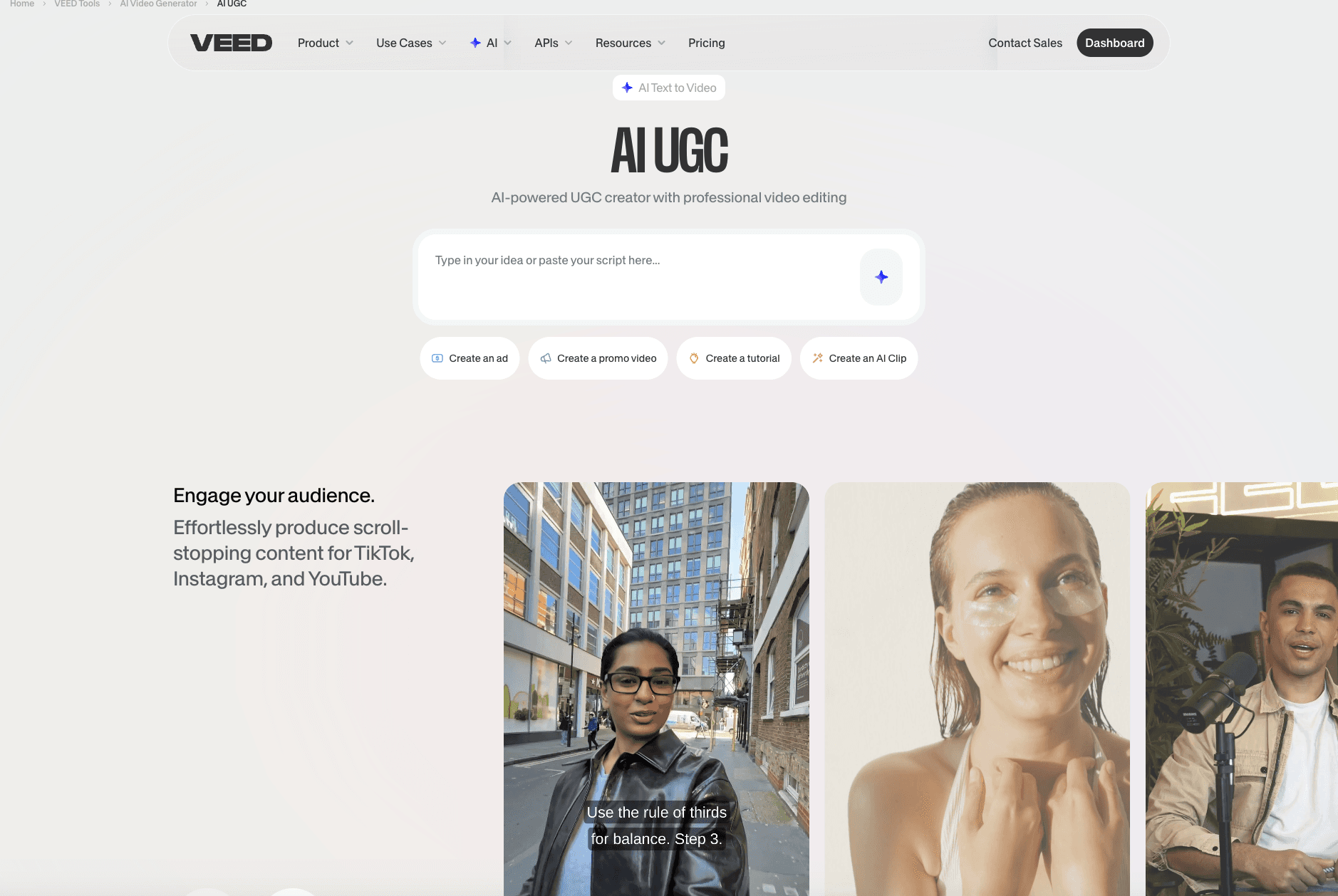
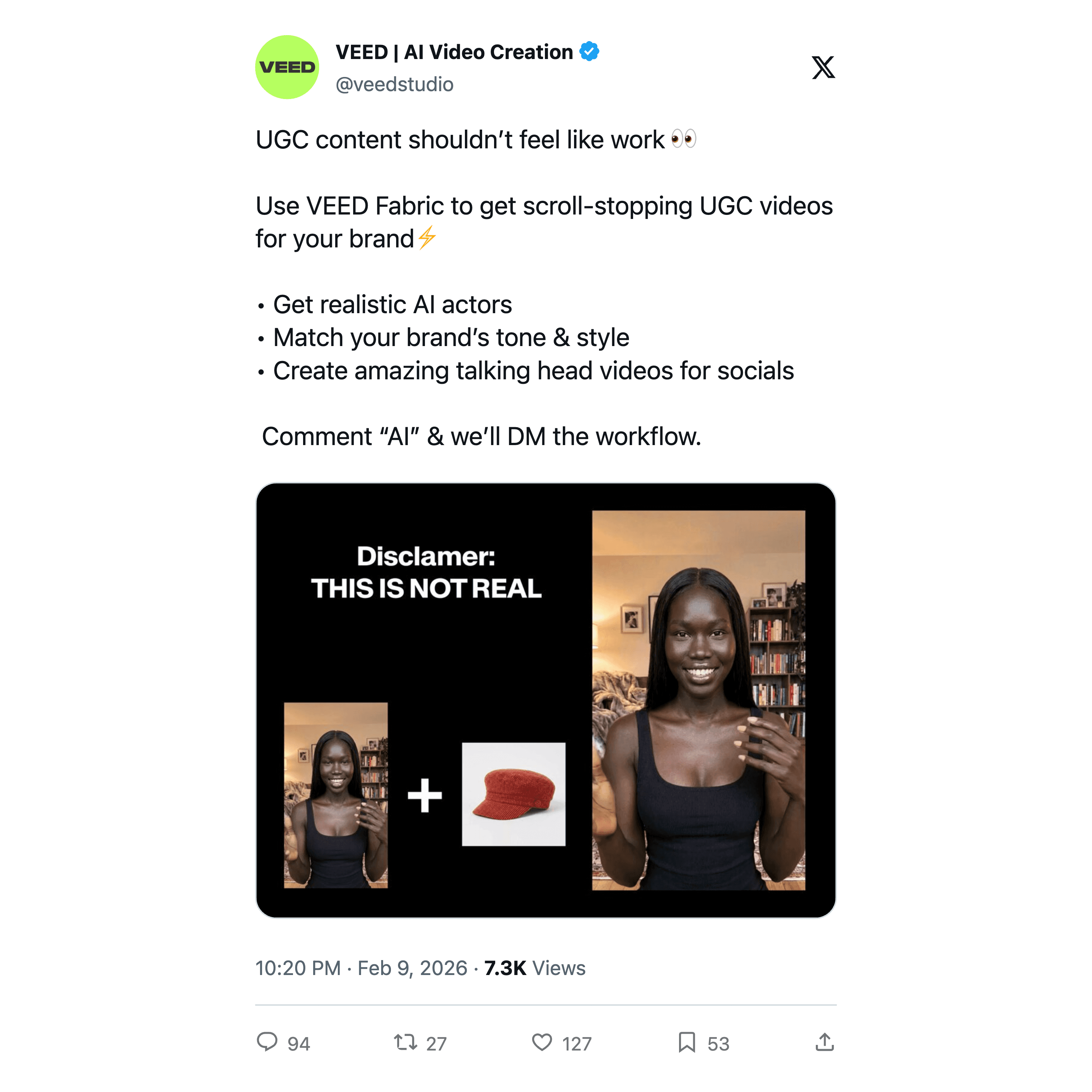
VEED is an all-in-one AI video platform that makes UGC-style videos fast and editable. You can write your own script or let AI generate one, pick a realistic avatar, and create talking-head style videos in minutes.
It works well for testimonials, product demos, tutorials, and short ads made for TikTok, Instagram, and YouTube Shorts.
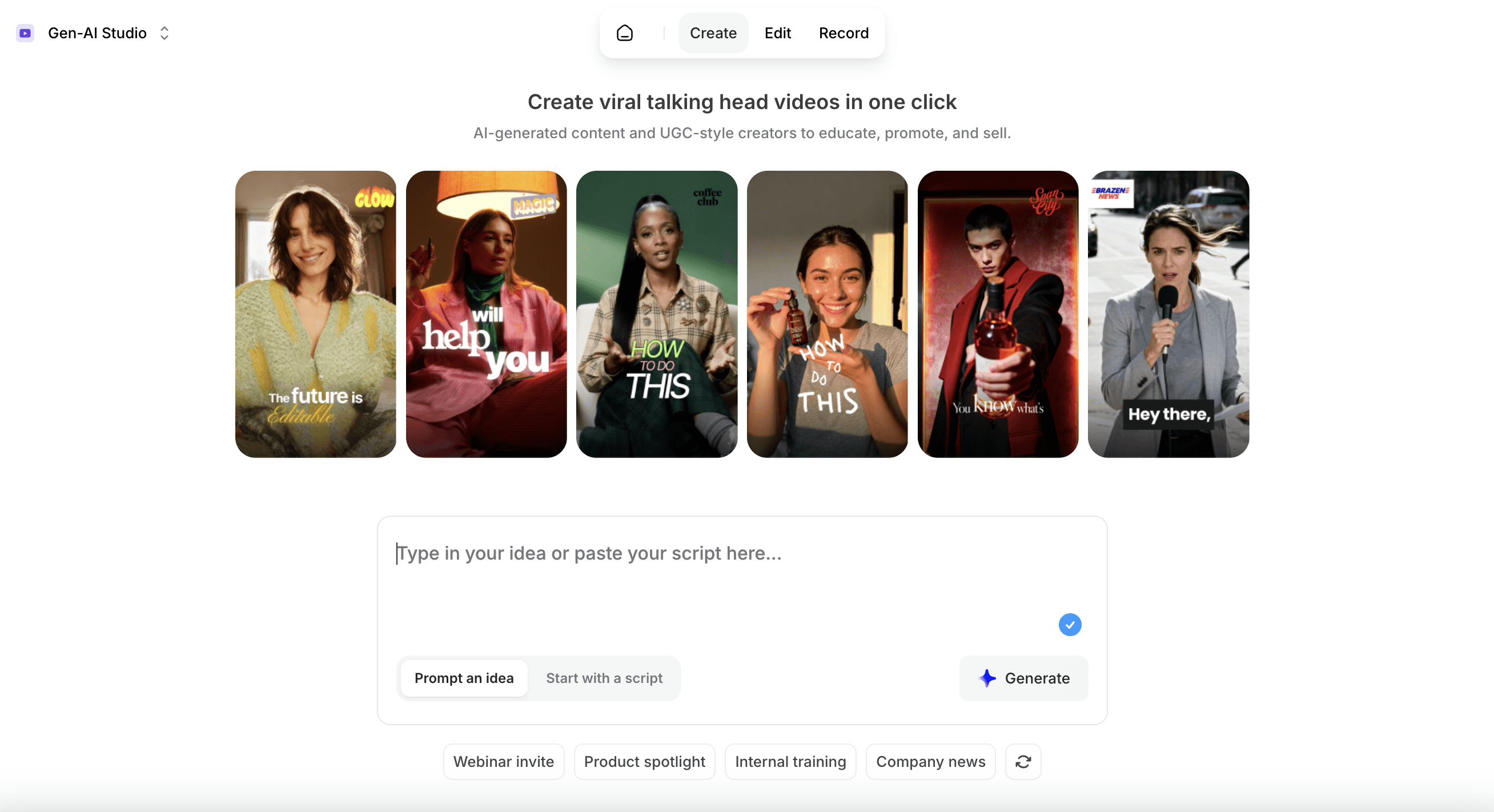
What sets VEED apart is editing control after generation. You are not locked into a final output. You can open the video in VEED’s editor, add product clips, insert CTAs, adjust captions, and apply brand colors and fonts. It also lets you generate B-roll with AI models or turn any image into a talking video, which helps when you want custom visuals instead of stock-looking content.
Pricing starts around $11 per month for the Lite plan and about $28 per month for the Pro plan when billed yearly. Lite works for basic UGC videos with watermarks removed.
Pro is better for teams and marketers who need unlimited AI videos, more AI tools, and language support. VEED fits best for brands that want UGC-style videos plus full editing in one place.
2. Higgsfield
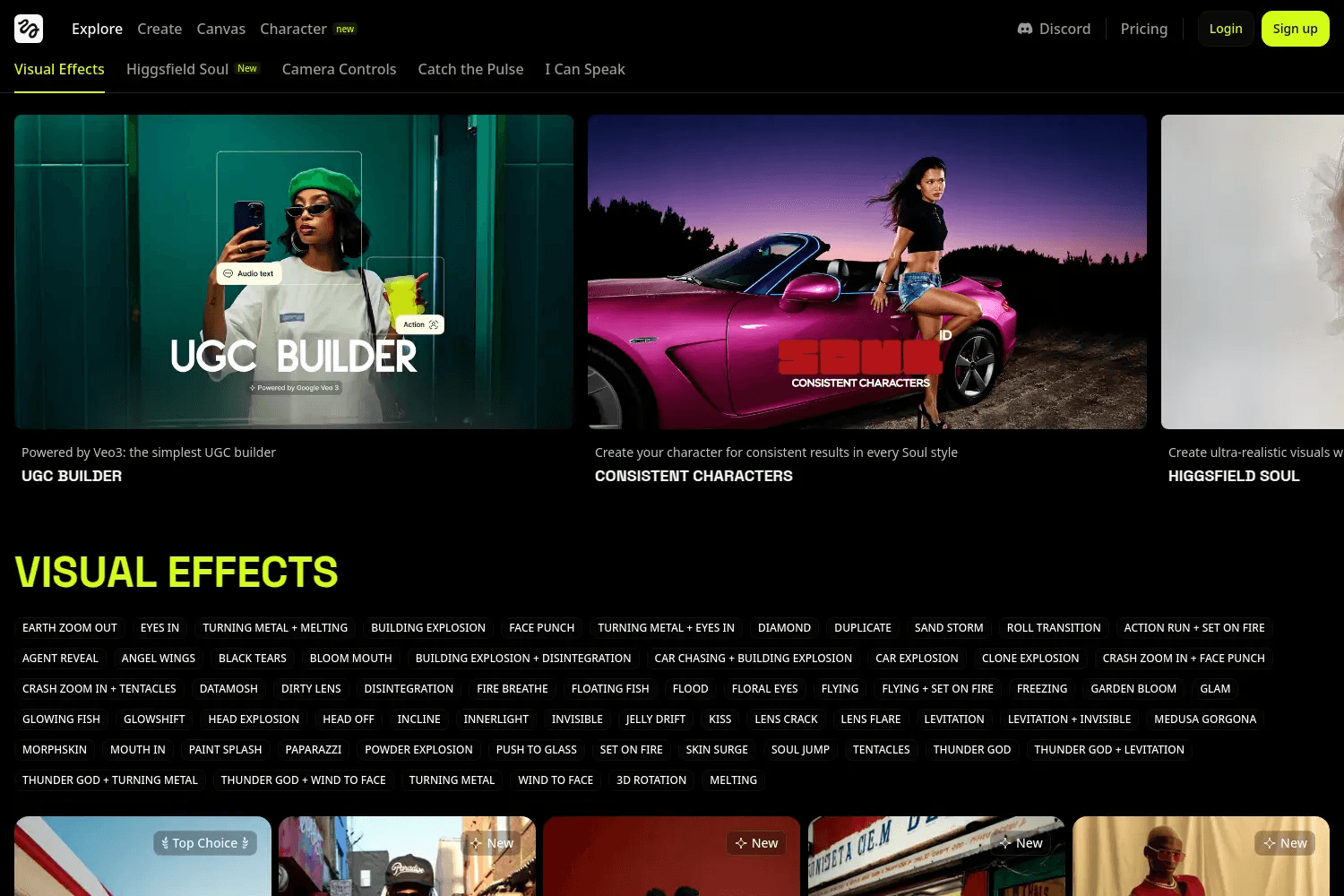
Higgsfield focuses on one thing: making AI UGC videos look real. Its videos do not feel polished or ad-like.
They feel handheld, natural, and human. The model is built to recreate small imperfections like subtle motion, ambient light, and real facial expressions. This makes Higgsfield a strong choice for brands that want creator-style videos that blend into organic feeds.
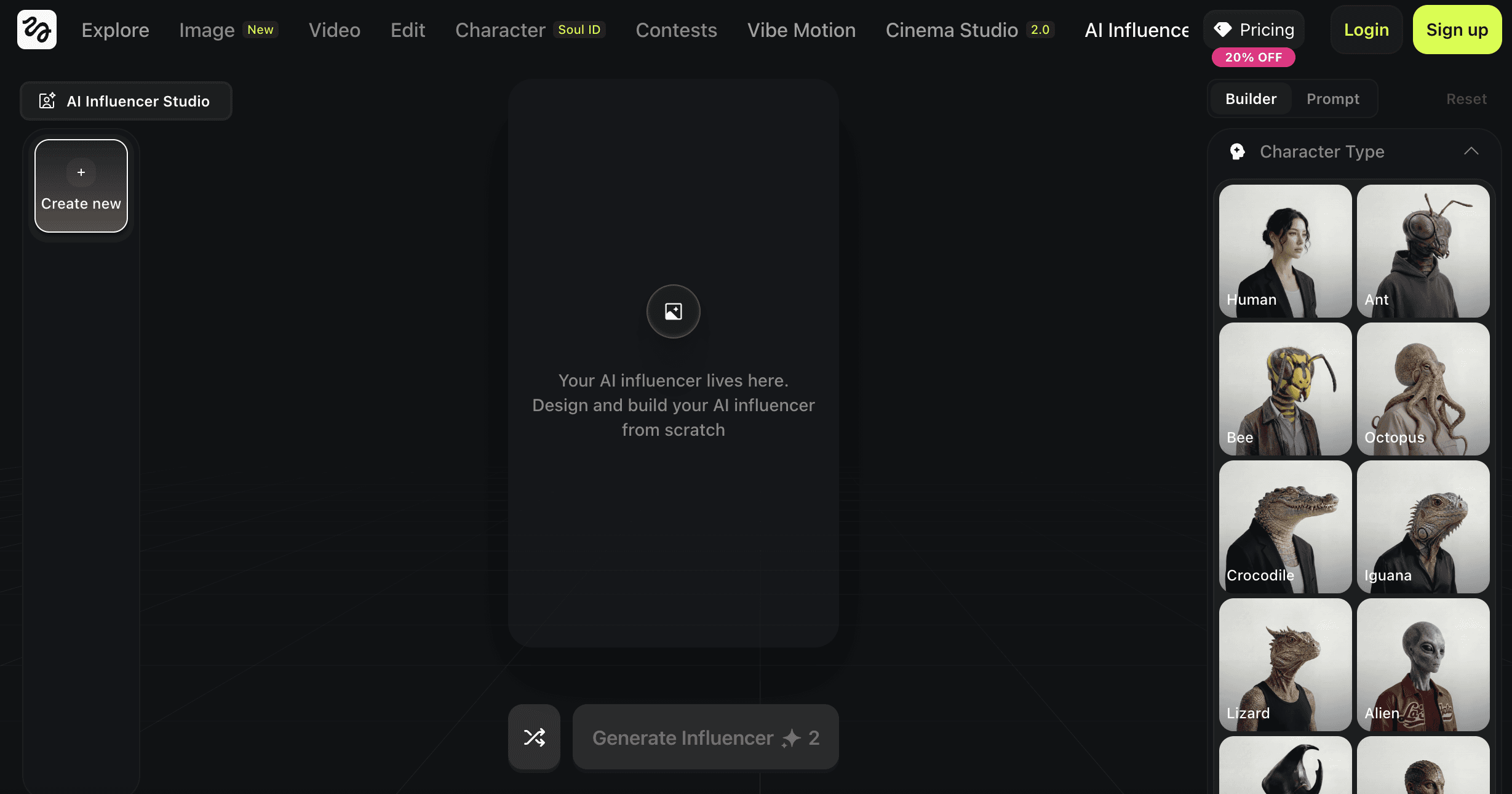
The workflow is simple and flexible. You describe the scene in plain text or upload a reference image. You choose the motion style like casual, testimonial, or cinematic.
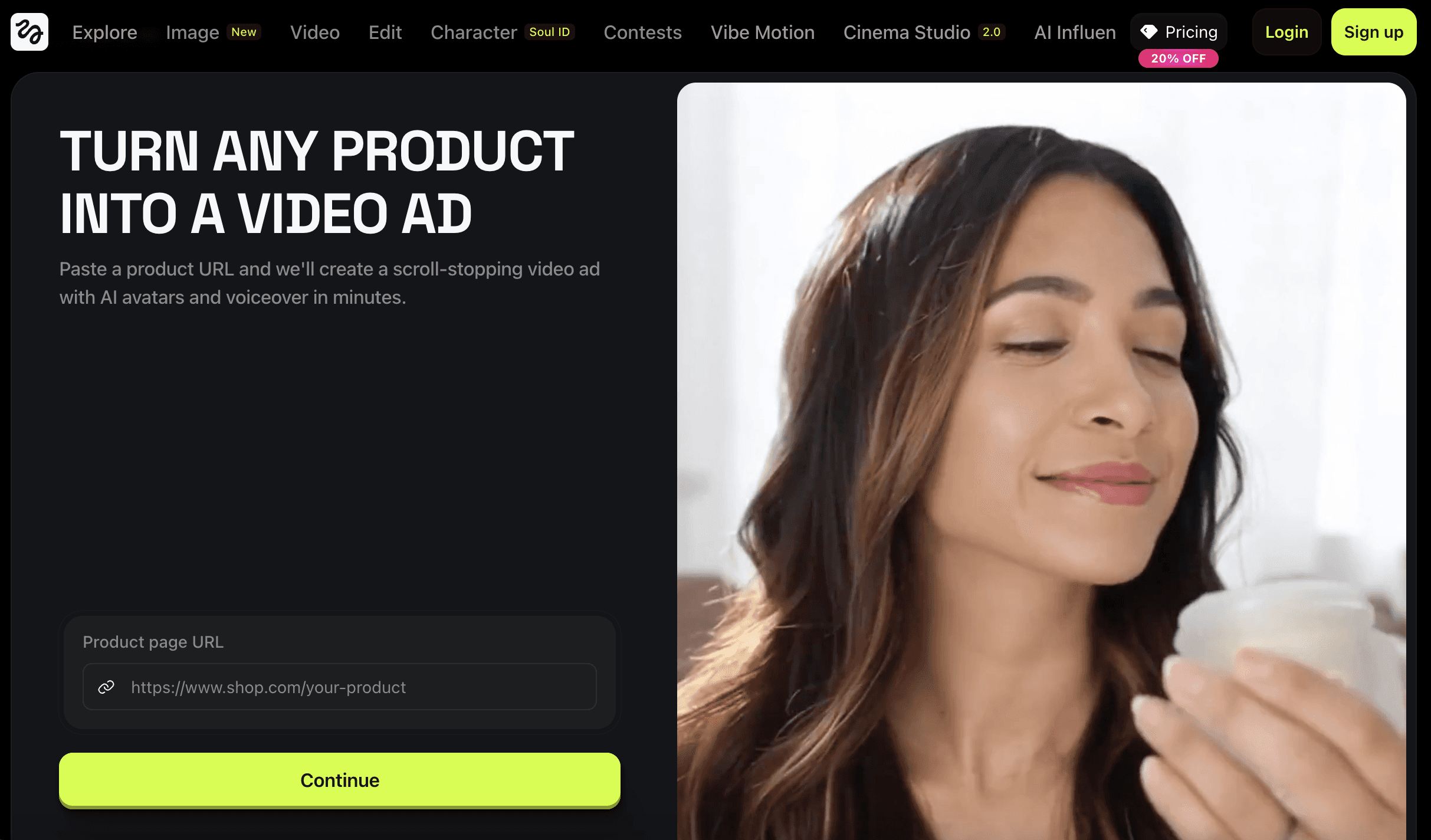
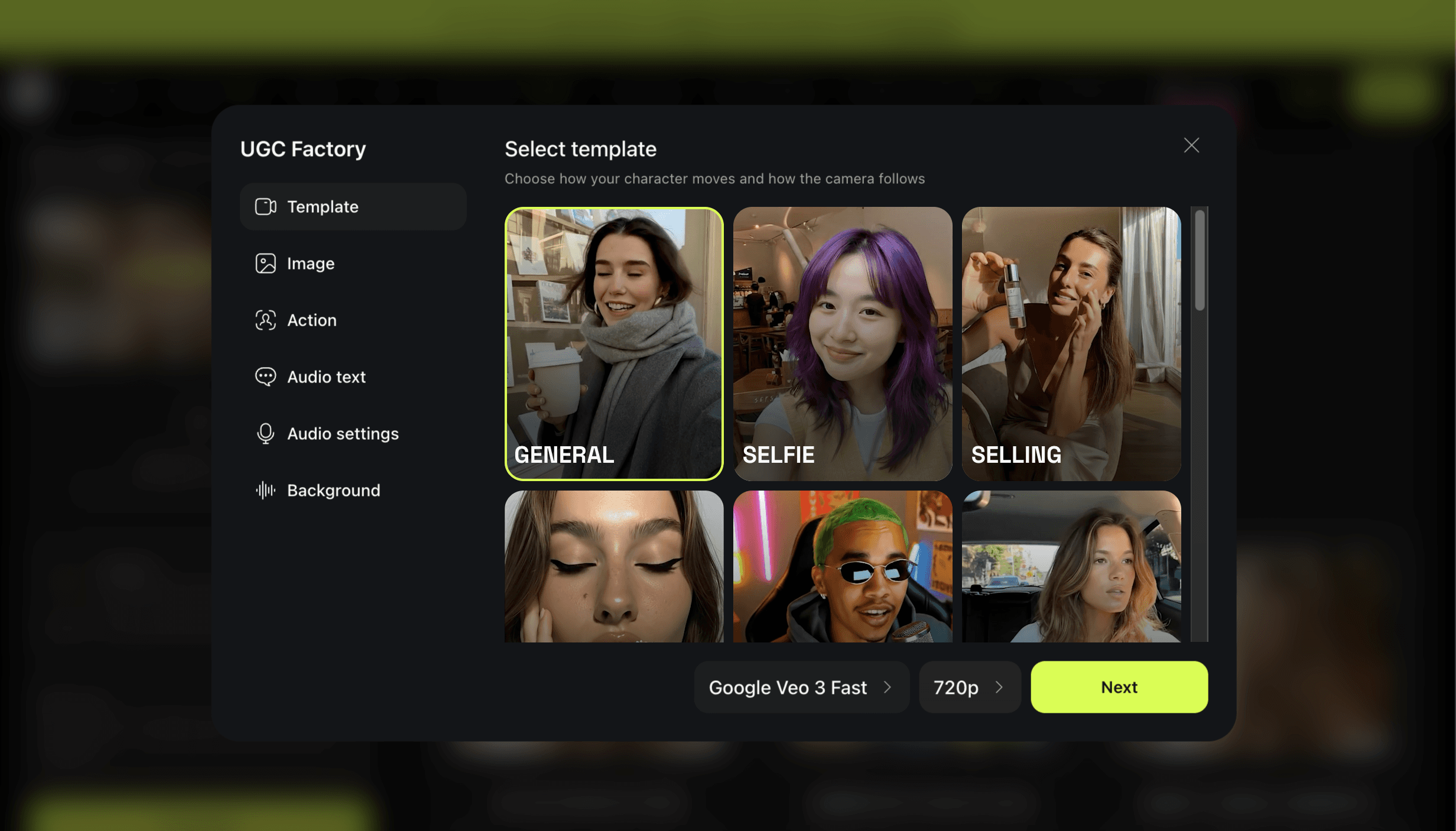
Higgsfield generates the video with consistent expressions and smooth motion across frames. It also offers tools like UGC Factory and Lipsync Studio, which let you turn images into talking videos using advanced lip-sync models such as Speak 2.0. This works well for testimonials, explainers, and voice-led content.
Pricing starts at $12 per month for the Basic plan. The Pro plan costs $29 per month, and the Ultimate plan costs $49 per month, all billed yearly. Higher tiers unlock more credits, more models, and higher concurrency for daily production.
Higgsfield fits best for marketers and founders who care more about realism than speed and want AI UGC that does not look like AI.
3. HeyGen
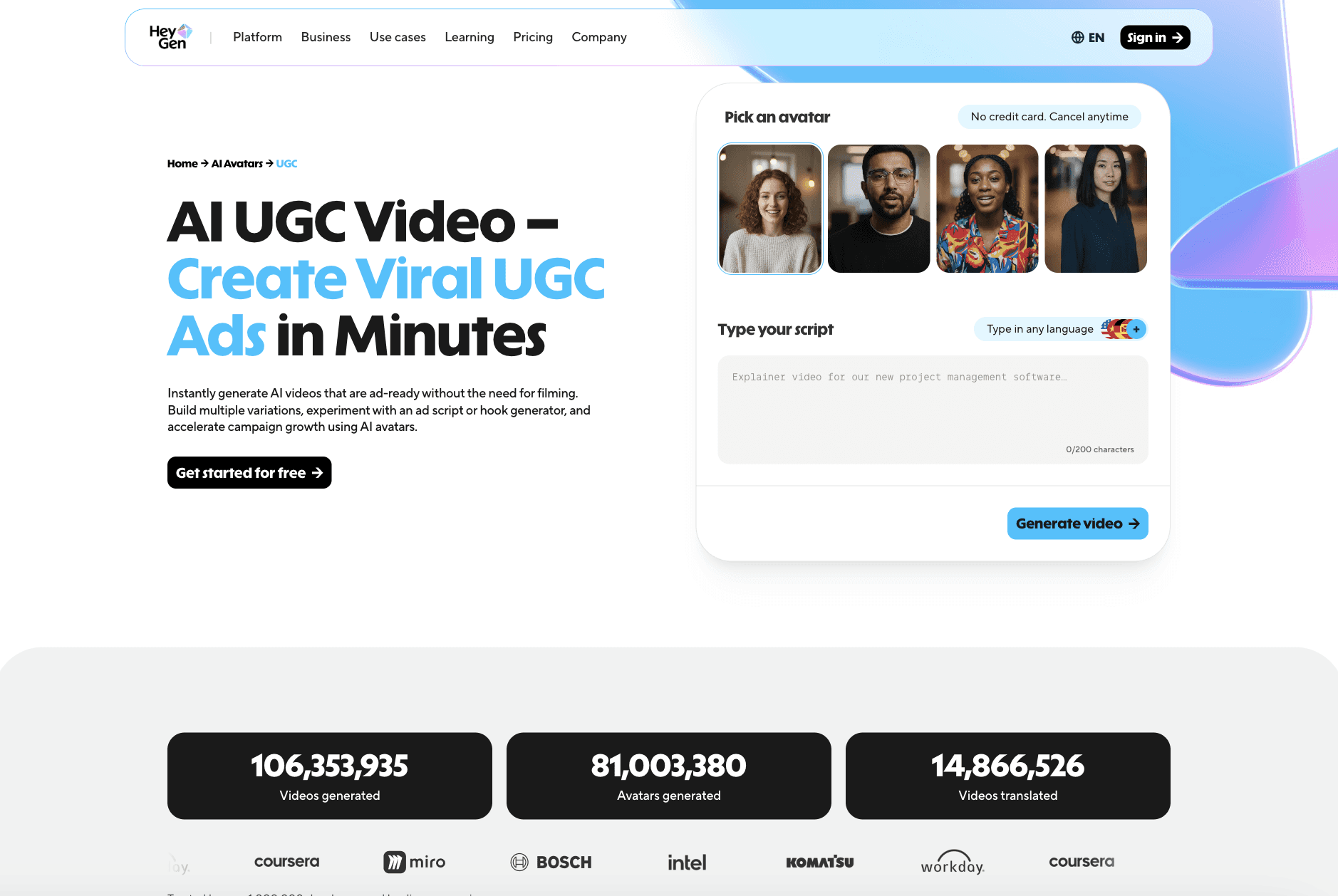
HeyGen is one of the most popular AI video tools for UGC, ads, and business videos. It lets you create videos from text, images, or audio without filming anything.
You choose an AI avatar, paste your script, and generate a video with natural lip sync, gestures, and voice. It works well for UGC ads, product demos, explainers, and internal videos across social and business use cases.
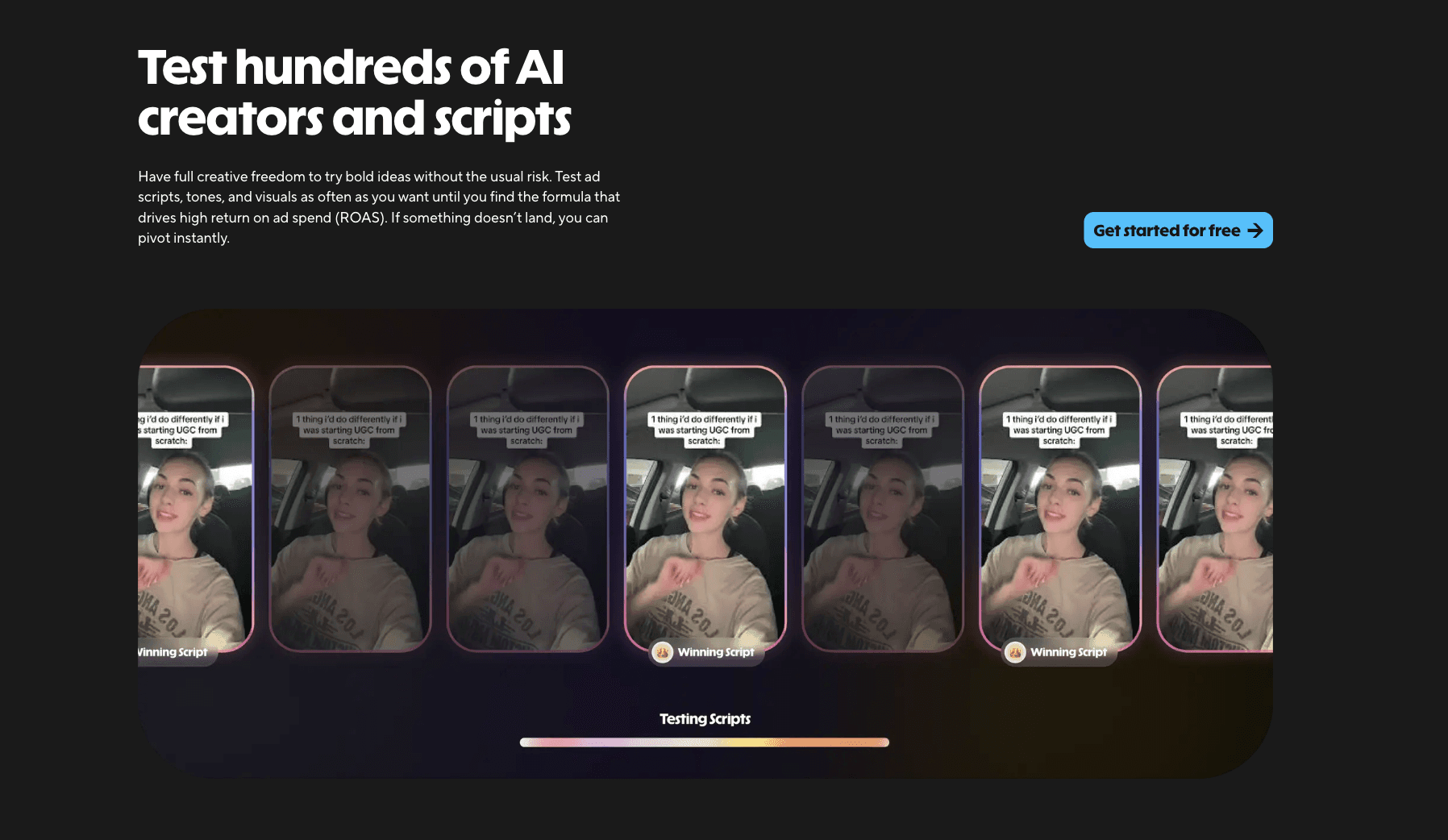
HeyGen stands out for scale and flexibility. It offers over 1,100 avatars, supports 175+ languages, and allows deep customization of tone, outfit, background, and delivery. You can also create a digital twin of yourself and reuse it across videos. For UGC ads, it makes testing easy. You can quickly generate many script and avatar variations to find what converts, without reshoots or creator delays.
Pricing starts at $29 per month for the Creator plan, which includes unlimited videos, custom avatars, voice cloning, and 1080p exports.
The Pro plan costs $99 per month and adds faster processing, higher limits, and 4K exports. HeyGen is best for teams and marketers who want reliable, scalable AI UGC with strong avatar quality and global language support.
4. Orior AI
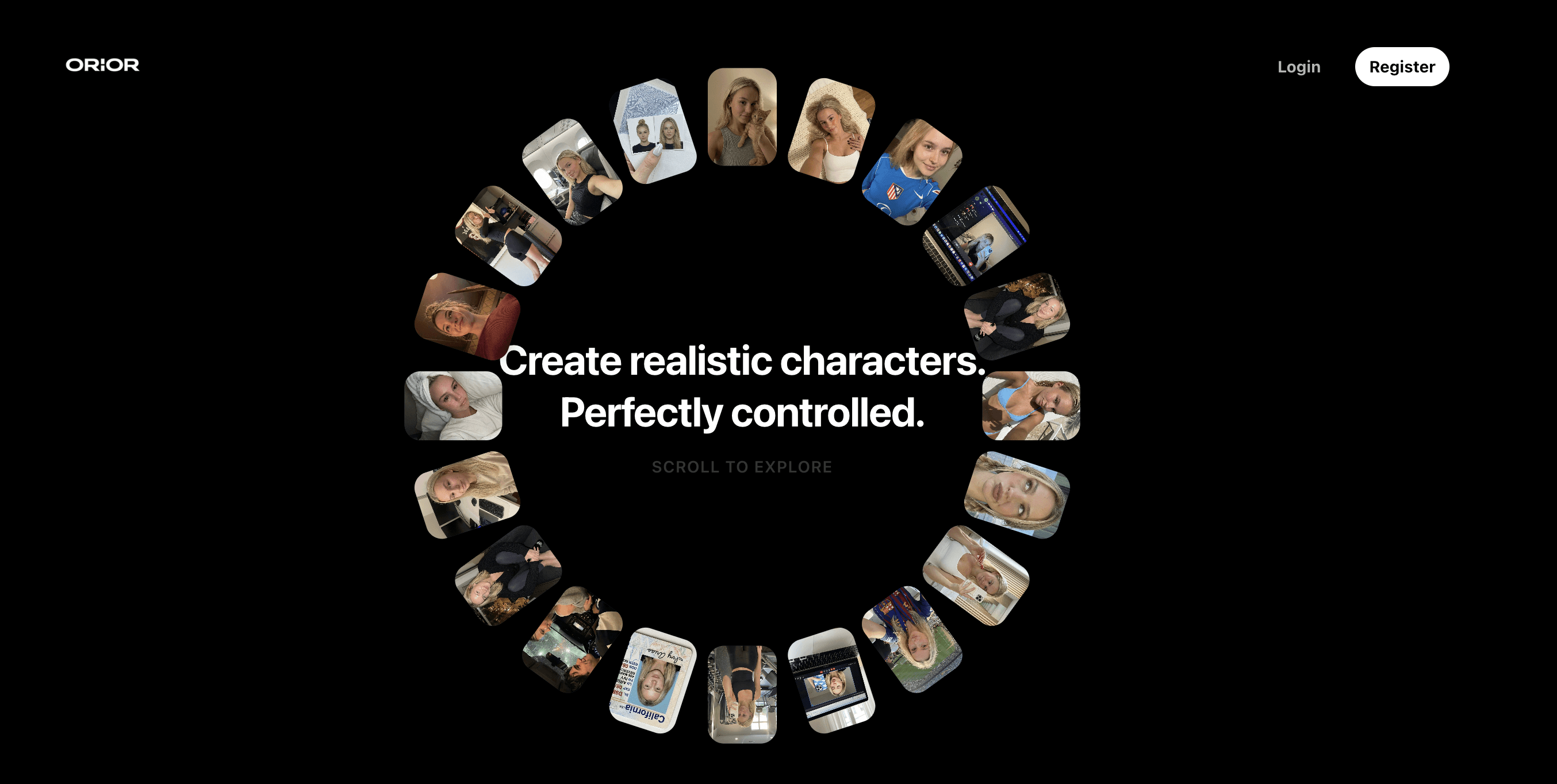
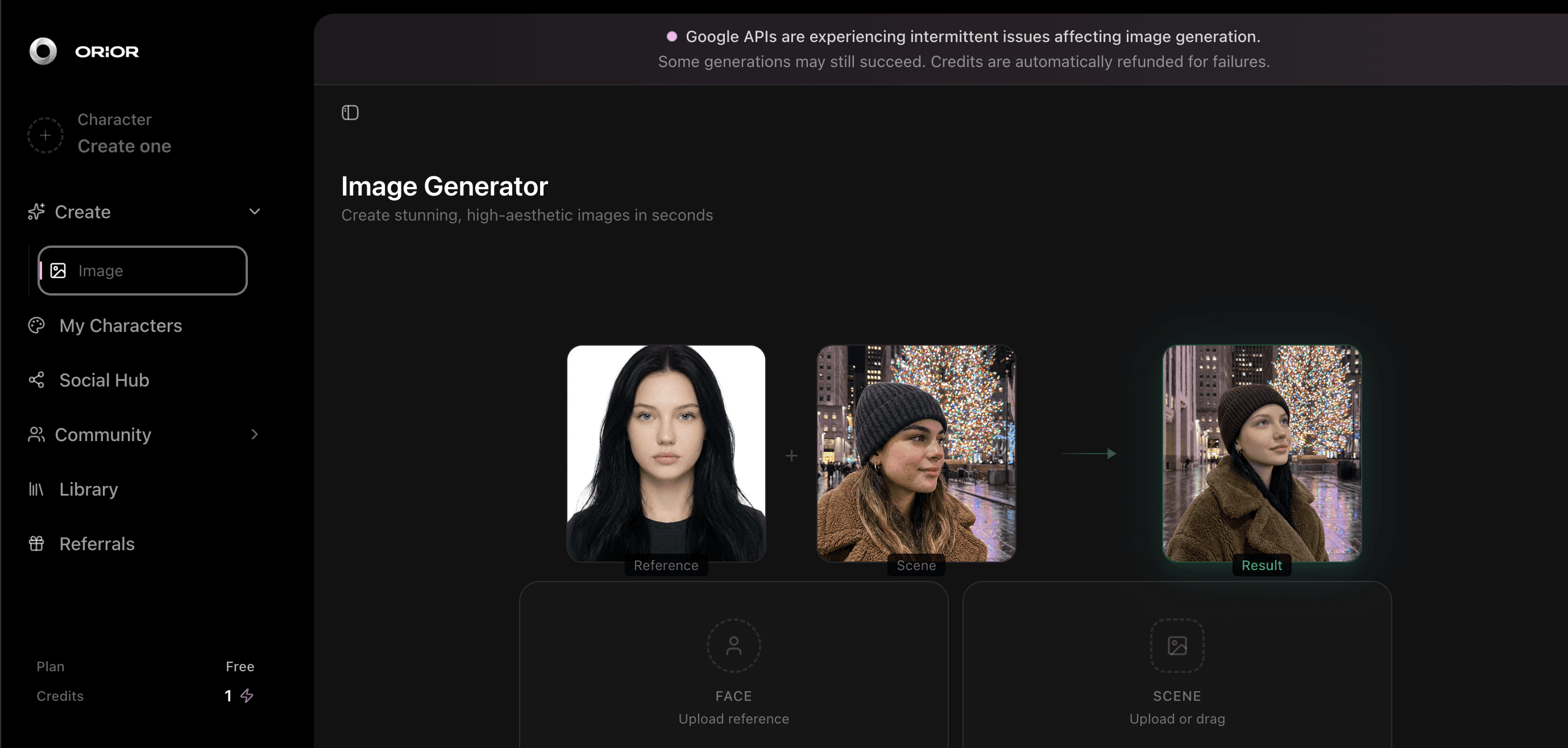
Orior is built for creators who want full control over UGC visuals. It focuses on realistic characters, exact poses, and consistent identity across images and videos. You can create content using a text prompt or a reference image.
Orior follows instructions closely, so what you describe is what you get. This makes it useful for brands and creators who need repeatable, on-brand UGC without random results.
The core strength of Orior is control. You can define pose, environment, and style in detail, and the system keeps everything consistent. There is no drift in faces, outfits, or posture across posts. It is designed for real social content, not experiments. Orior also lets you publish directly to Instagram, X, TikTok, and Snapchat from one place, which saves time and avoids re-uploading.
Pricing starts at about $16 per month for the Creator plan with 60 credits and up to 3 characters. The Influencer plan costs around $42 per month and supports more characters and credits.
The Agency plan costs about $107 per month for teams managing many characters. Orior fits best for creators, influencers, and agencies who care more about visual control and consistency than AI avatars speaking on camera.
5. Reloop
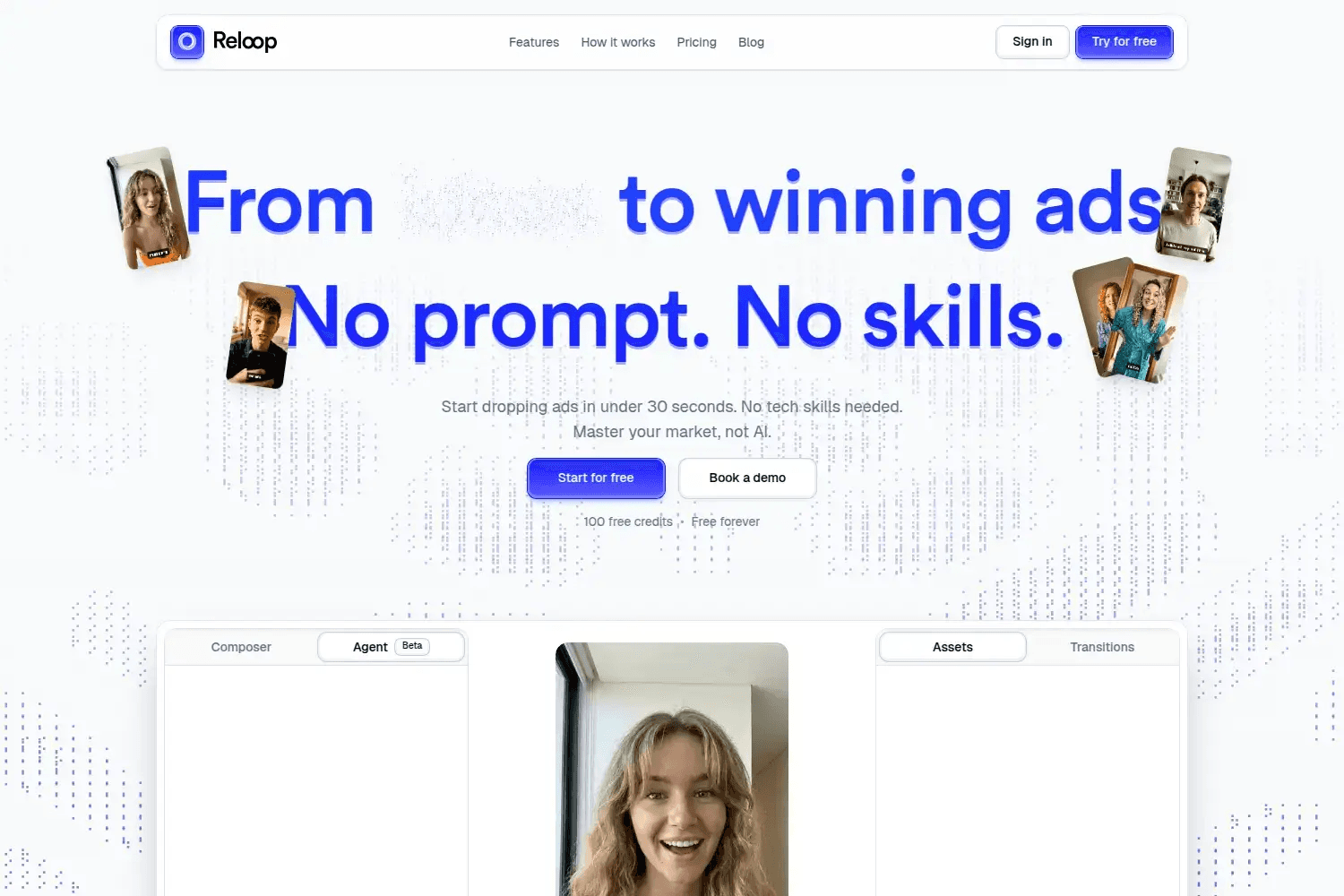
Reloop is built for one goal: turning product ideas into winning UGC ads fast. You do not write prompts or manage complex settings.
You describe your product and vibe, and Reloop’s creative agent builds the full video for you. It plans the hook, scenes, pacing, captions, and CTA automatically. This makes it ideal for marketers who want speed without learning AI workflows.
The platform feels more like working with a strategist than a tool. You answer simple questions, and Reloop creates a clear ad structure with scenes, avatars, voiceovers, music, and cuts. You can edit every frame in its pixel-level editor, test many variations, and generate multiple ads from one idea. It also supports custom avatars and voice cloning, so brands can scale content that still feels personal.
Pricing starts at about $54 per month for the Creator plan, which includes 1,000 credits and unlimited exports.
The Studio plan costs around $108 per month for teams, and the Enterprise plan starts near $325 per month for high-volume ad production. Reloop is best for ecommerce brands and performance marketers who want fast, structured UGC ads without prompts, guesswork, or creator delays.
6. Invideo
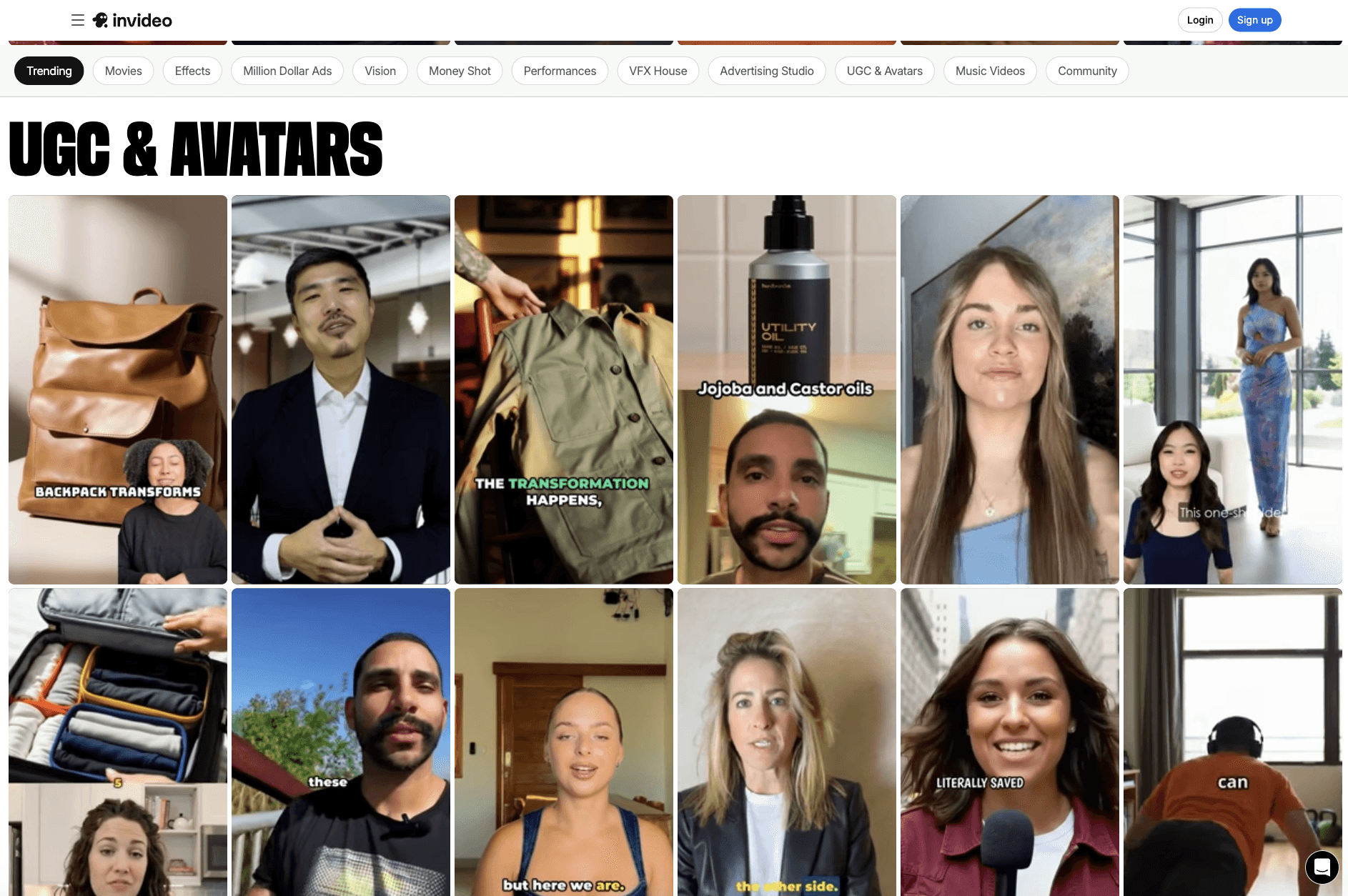
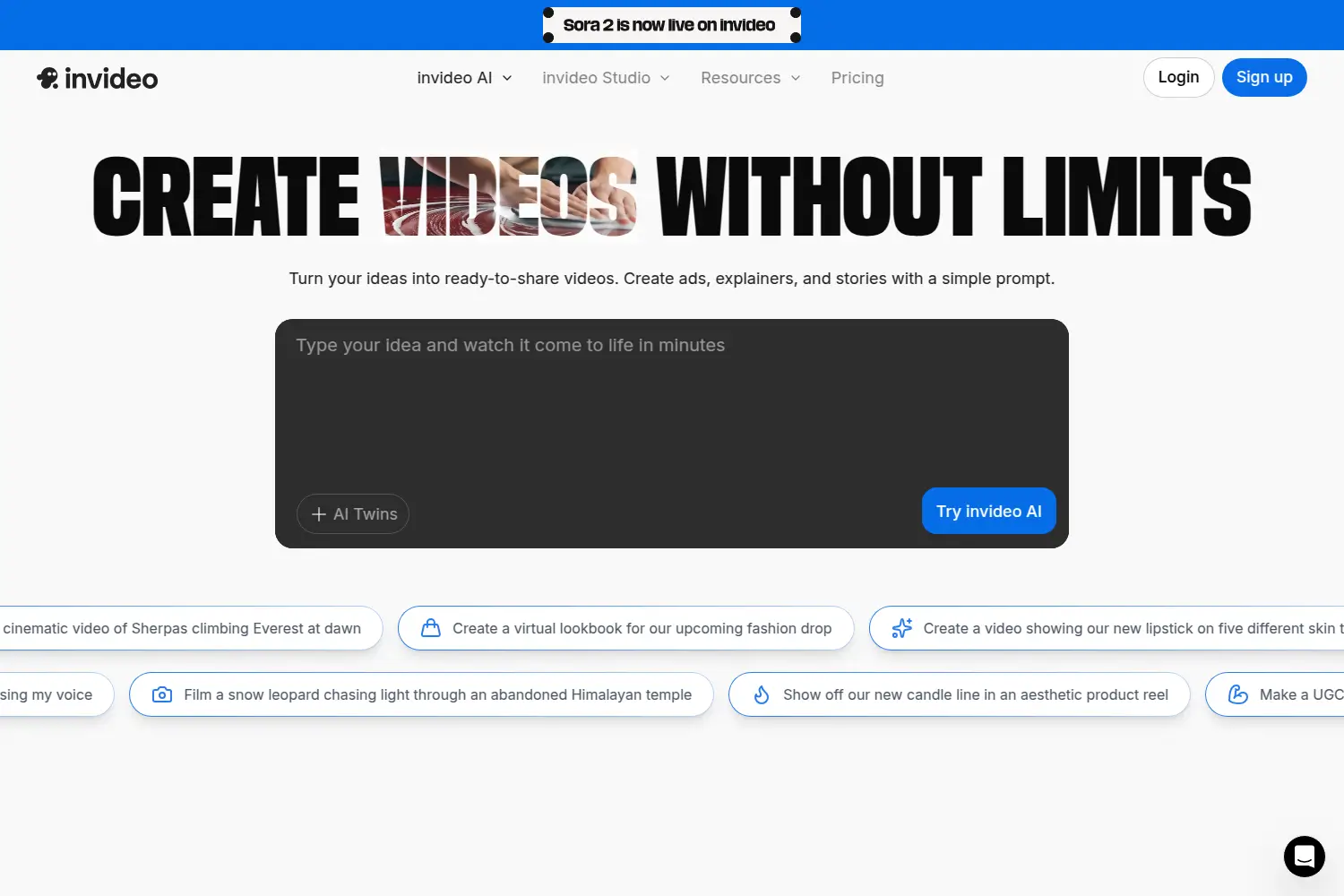
InVideo is a widely used AI video platform that helps create UGC-style ads quickly. You choose an AI actor, add product details, and the platform generates a full video with dialogue, scenes, captions, music, and transitions.
It works well for testimonial videos, product demos, skit-style ads, and podcast-style promotions. The goal is to make content that feels like real user posts rather than polished commercials.
InVideo also supports many styles of UGC such as selfie videos, spokesperson clips, walk-and-talk content, and two-person conversations.
Pricing starts with a free plan that includes limited exports and watermarks. Paid plans start around $35 per month for the Plus plan and $60 per month for the Max plan. These unlock longer videos, more credits, more generative video time, and unlimited exports.
7. Kling AI
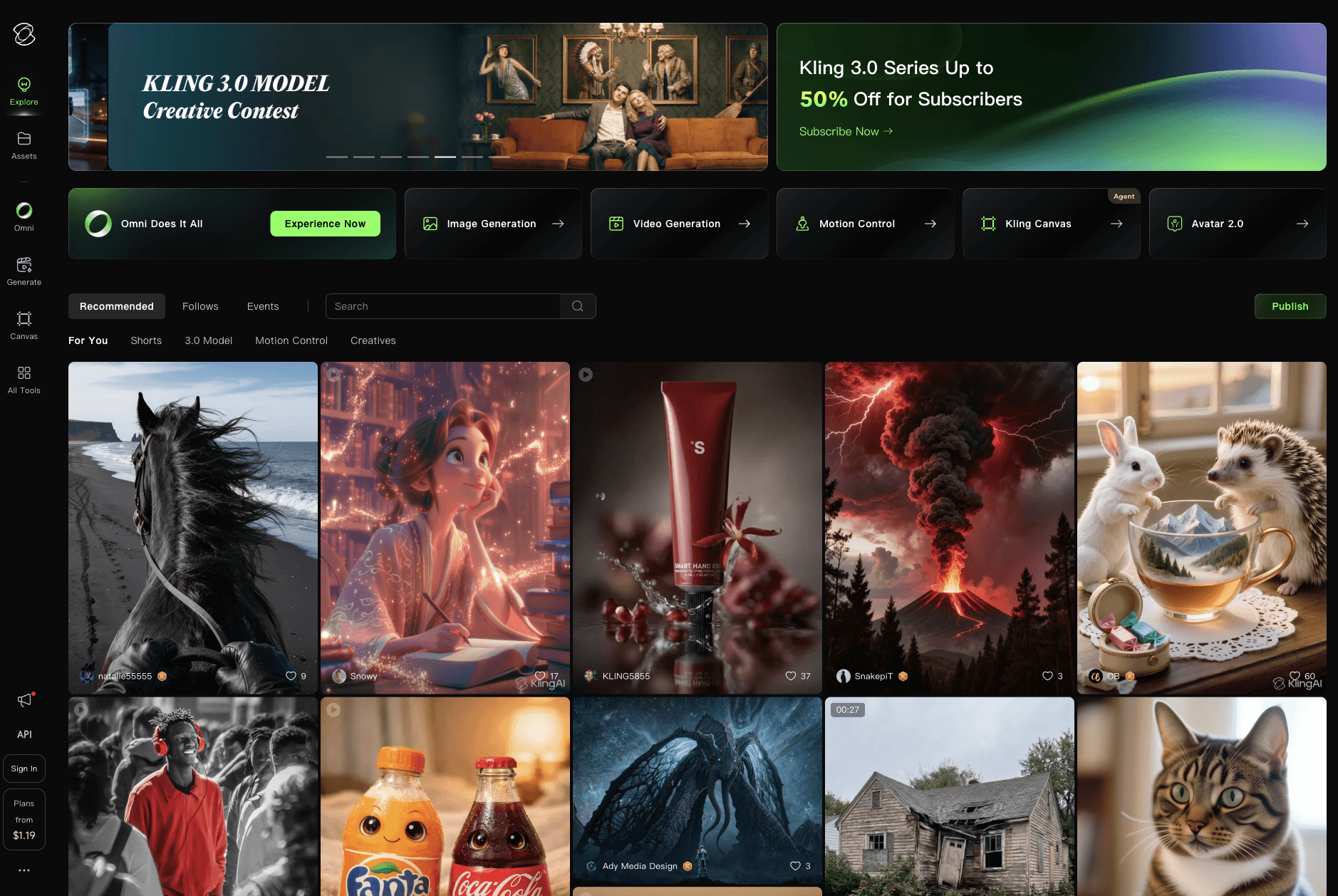
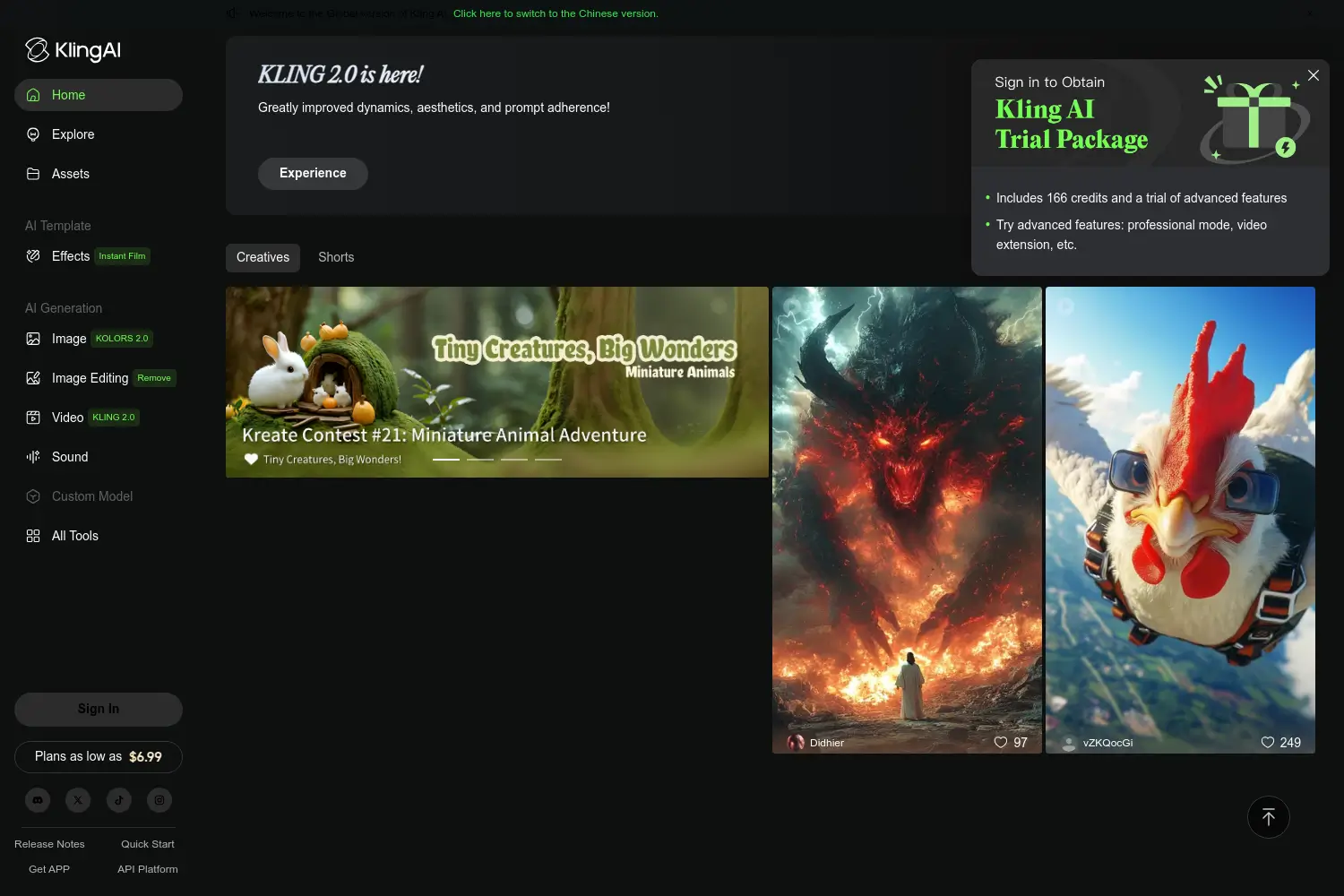
Kling AI is a powerful text-to-video model designed to generate realistic motion and scenes. Instead of focusing only on avatars, it creates full video clips from text prompts, images, or reference footage.
This makes it useful for UGC creators who want custom scenes, product shots, or lifestyle footage without filming anything.
The platform supports text-to-video and image-to-video generation with tools for motion control, lip sync, digital humans, and multi-shot storytelling. You can describe a scene, animate an existing image, or generate multiple shots that feel like part of the same video. Kling also supports native audio, voice control, and storyboard-style generation in newer models like Video 3.0 Omni.
Pricing starts at about $1.19 per week for the standard plan, which includes 100 credits weekly. That is enough for roughly five short 720p videos or hundreds of generated images.
Wrapping Up
AI UGC video generators make content production much faster. Instead of hiring creators, filming videos, and waiting for edits, you can generate multiple UGC-style videos in minutes.
Each tool in this list solves a slightly different problem. Some focus on realistic avatars. Others focus on ad creation workflows or cinematic video generation. The right choice depends on what you need most, realism, editing control, or fast ad testing.
If you want to discover more tools like these, explore the growing collection on Toolfolio. It features curated AI tools, creator software, and useful resources that help founders, marketers, and creators work faster and build better products.
More blogs:
You May Also Like








Featured Tools
Newest Additions









AI Image & Video Generation









Vibe Coding Library






















Screenshot & Screen Recording Tools