




7 Best AI Marketing Tools to Get Ahead in 2026
A practical list of the best AI marketing tools I use to grow faster, work smarter, and stay ahead in 2026.

Dudu
Jan 24, 2026
Last Updated Jan 24, 2026
Image Credit: Toolfolio
Marketing today feels harder than it should be. There are more channels, more content, more data, and less time. You are expected to write faster, launch quicker, test more ideas, and still show results.
That pressure is exactly why people turn to AI marketing tools.
AI tools are no longer “nice to have.” They help you do real work. Writing copy, planning content, researching keywords, running ads, designing visuals, and analyzing performance. Used right, they save time and remove guesswork. Used wrong, they create noise. The difference is knowing which tools actually help.
This guide is a simple, honest list of the best AI marketing tools. These tools solve real problems marketers face every day.
Each tool exists to make your work easier, faster, or better. If you want practical tools that help you move ahead this year, this list is for you.
What Is AI Used for in Marketing Today
AI helps marketers do more work in less time. It turns large amounts of data into clear actions. Instead of guessing, marketers use AI to make smarter decisions, faster.
AI does not replace marketing skills. It supports them. It handles repeat tasks, finds patterns humans miss, and helps teams focus on strategy and creativity.
Personalization: AI studies user behavior to show the right content to the right person. This includes emails, landing pages, product suggestions, and ads. Better relevance leads to higher clicks and conversions.
Predictive analytics: AI predicts what users may do next. It helps forecast demand, score leads, and decide where to spend budgets. Many teams see 20 to 30 percent better ROI from these insights.
Content and SEO: AI speeds up writing, editing, and keyword research. Marketers use it to create blogs, ads, emails, and social posts faster. Most teams now rely on AI writing tools to save time and stay consistent.
Customer segmentation: AI groups users based on behavior, intent, and history. This makes targeting sharper and messaging more effective across campaigns.
Customer support: AI chatbots handle common questions all day. Sentiment analysis helps brands understand how customers feel and where issues start.
Ad optimization: AI adjusts bids, audiences, and creatives in real time. This often lowers ad costs and improves performance without manual work.
Why Marketers Are Adopting AI So Fast
Nearly all businesses plan to increase AI investment
Most marketers now use AI daily in some part of their workflow
AI tools speed up campaigns by up to 75 percent
Brands report higher conversions, better engagement, and stronger sales
AI marketing is no longer experimental. It is already part of how modern teams plan, create, and grow. The key is choosing tools that solve real problems, not tools that add complexity.
Best AI Marketing Tools to Get Ahead This Year
1. Semrush (for SEO, content, and market research)
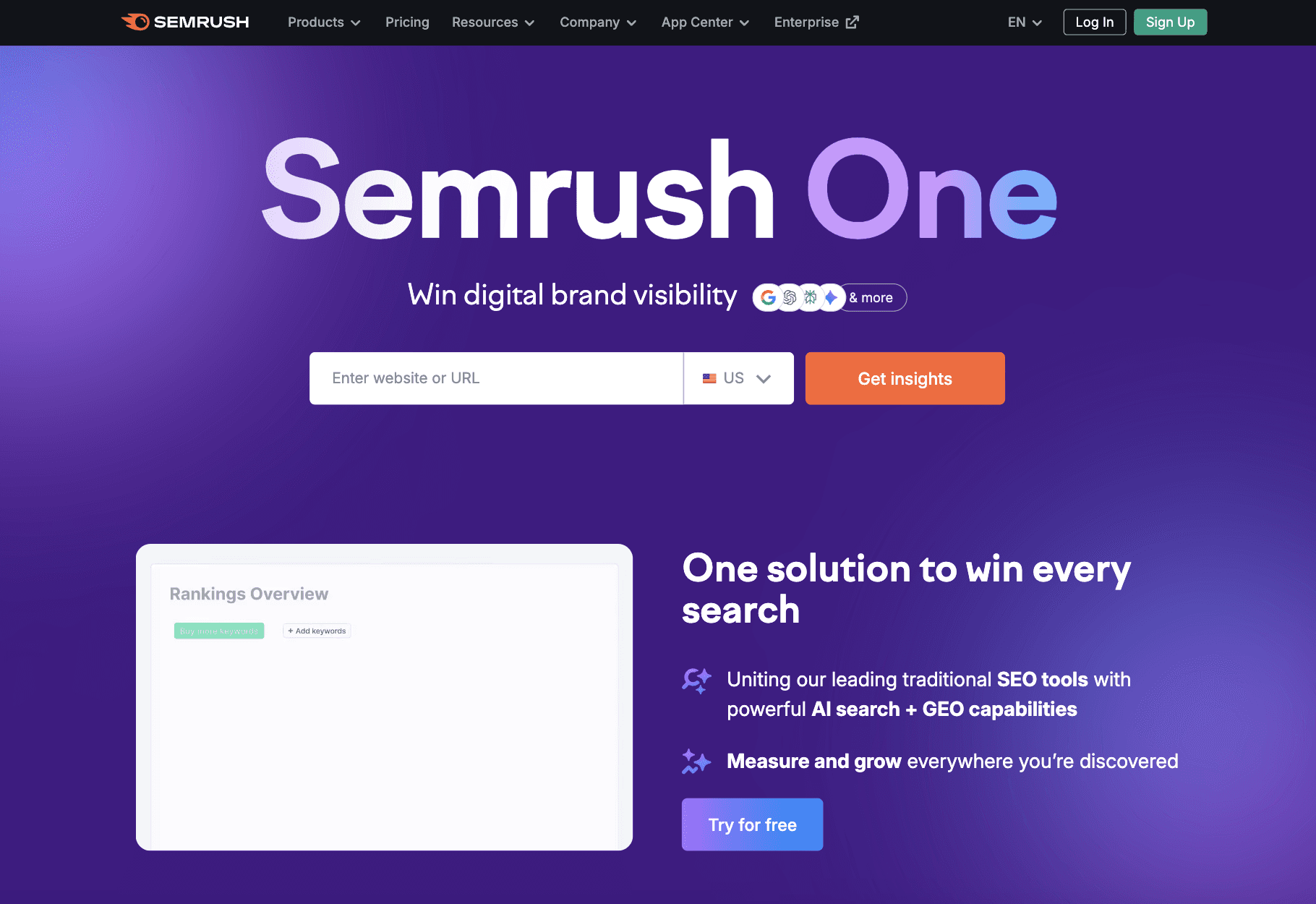
Semrush is an all-in-one AI marketing tool built to help you win search. It covers keyword research, content planning, competitor analysis, backlinks, ads, and now AI search visibility.
Instead of using five different tools, you get one platform to see how your brand performs across Google and AI-driven search results.
Marketers use Semrush to find keywords that can actually rank, not just high-volume terms. Its AI insights show search intent, traffic potential, and keyword difficulty so you know what is worth writing or bidding on.
For content teams, tools like the SEO Writing Assistant help improve readability, structure, and on-page SEO while you write.
Semrush is also strong for competitive research. You can see where competitors get traffic, what ads they run, which keywords they rank for, and where gaps exist. This makes it useful for SEO, paid ads, content strategy, and market planning. If search traffic matters to your business, Semrush gives clear data to guide every decision.
2. TypoTab (for fast writing and daily productivity)
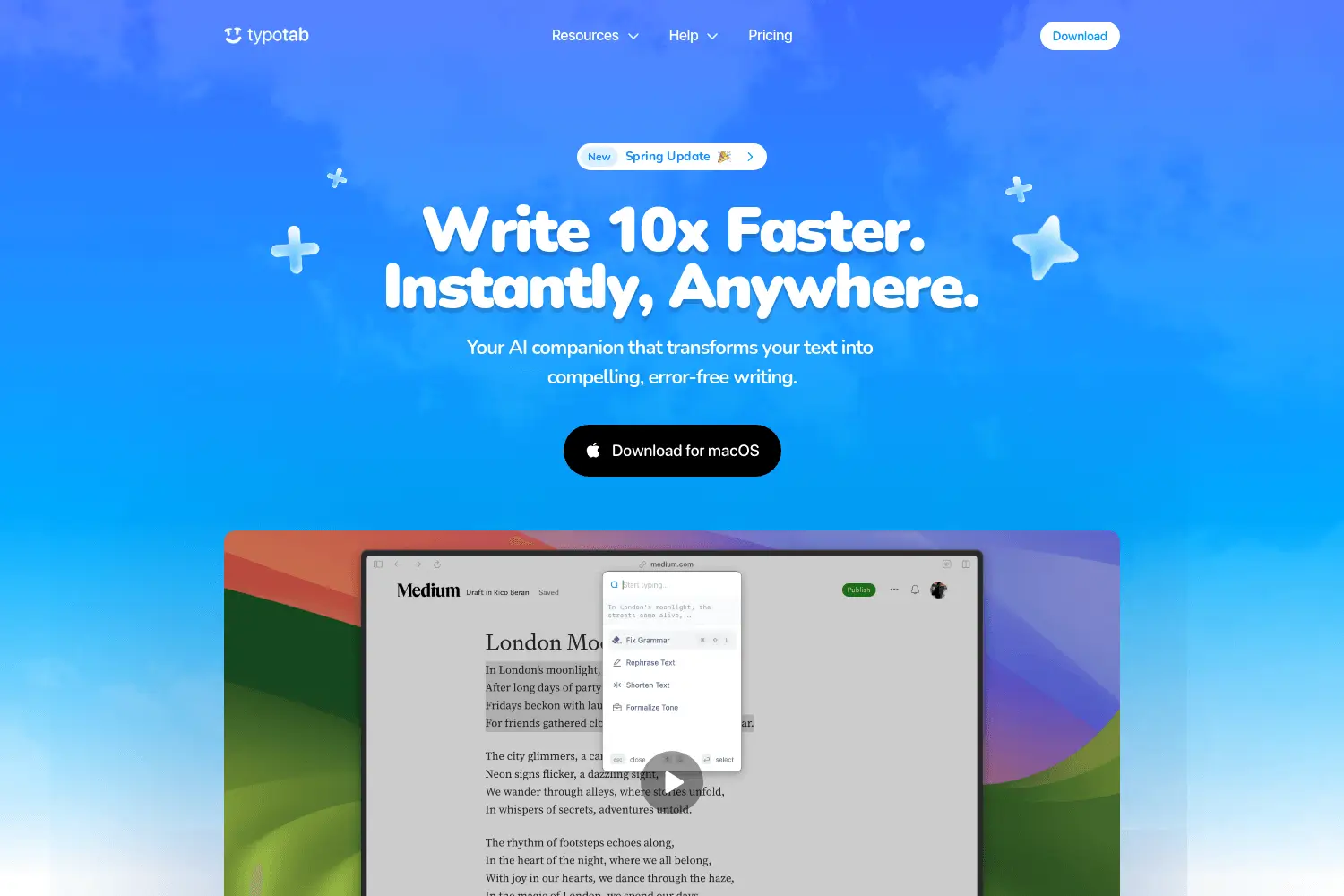
TypoTab is an AI writing assistant built for speed. It lives in your menu bar and works inside any app you already use.
You do not need to open a new tab or switch tools. You press a shortcut, select an action, and your text improves instantly. This makes it useful for marketers who write all day across emails, docs, Slack, Notion, and browsers.
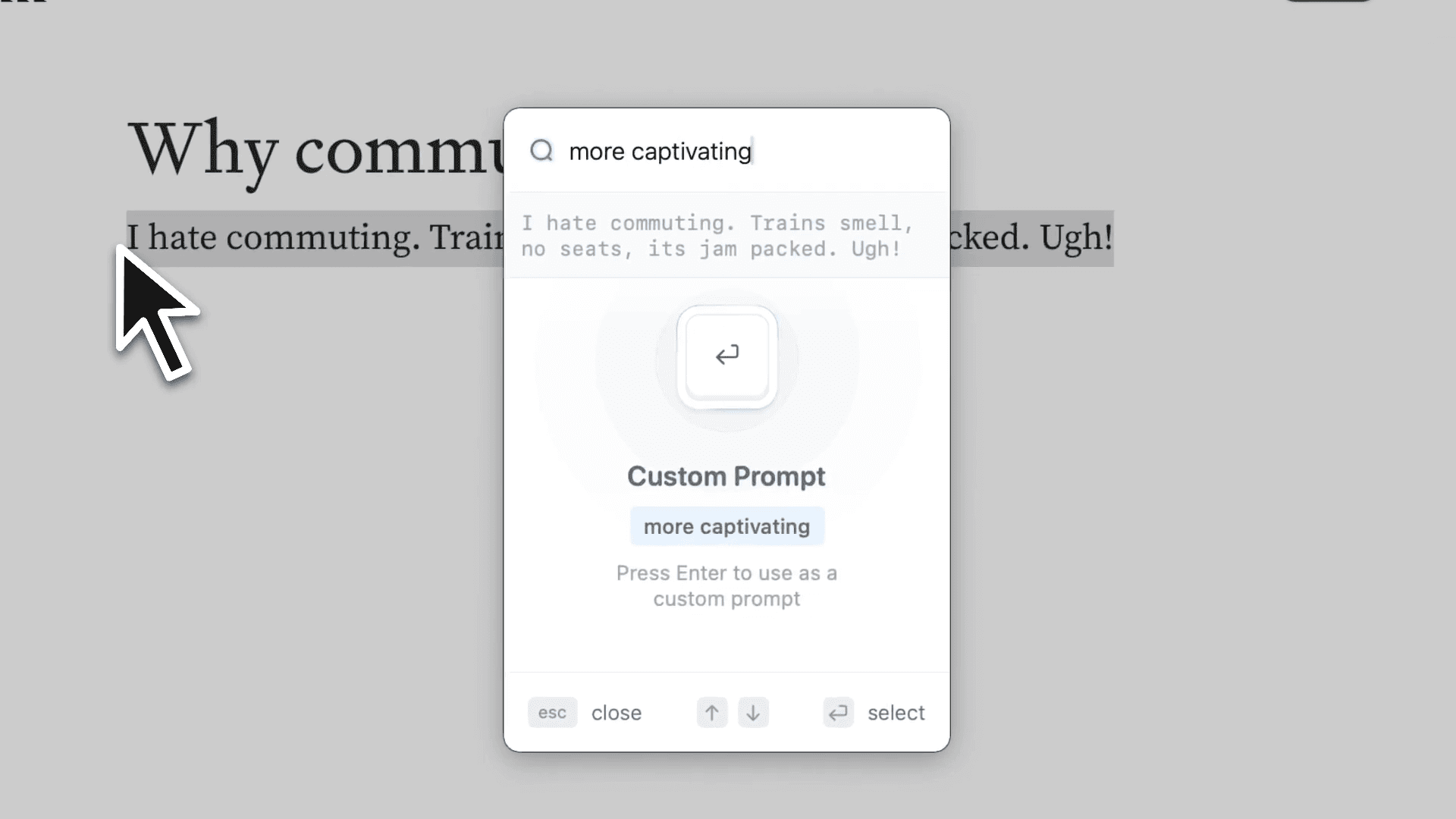
Marketers use TypoTab to fix grammar, rewrite lines, shorten copy, or polish ideas without breaking flow. It works well for ad copy, cold emails, landing page text, proposals, and social posts.
Compared to tools like Grammarly, TypoTab focuses more on action-based rewriting and productivity, not just corrections. You can turn rough thoughts into clean, usable text in seconds.
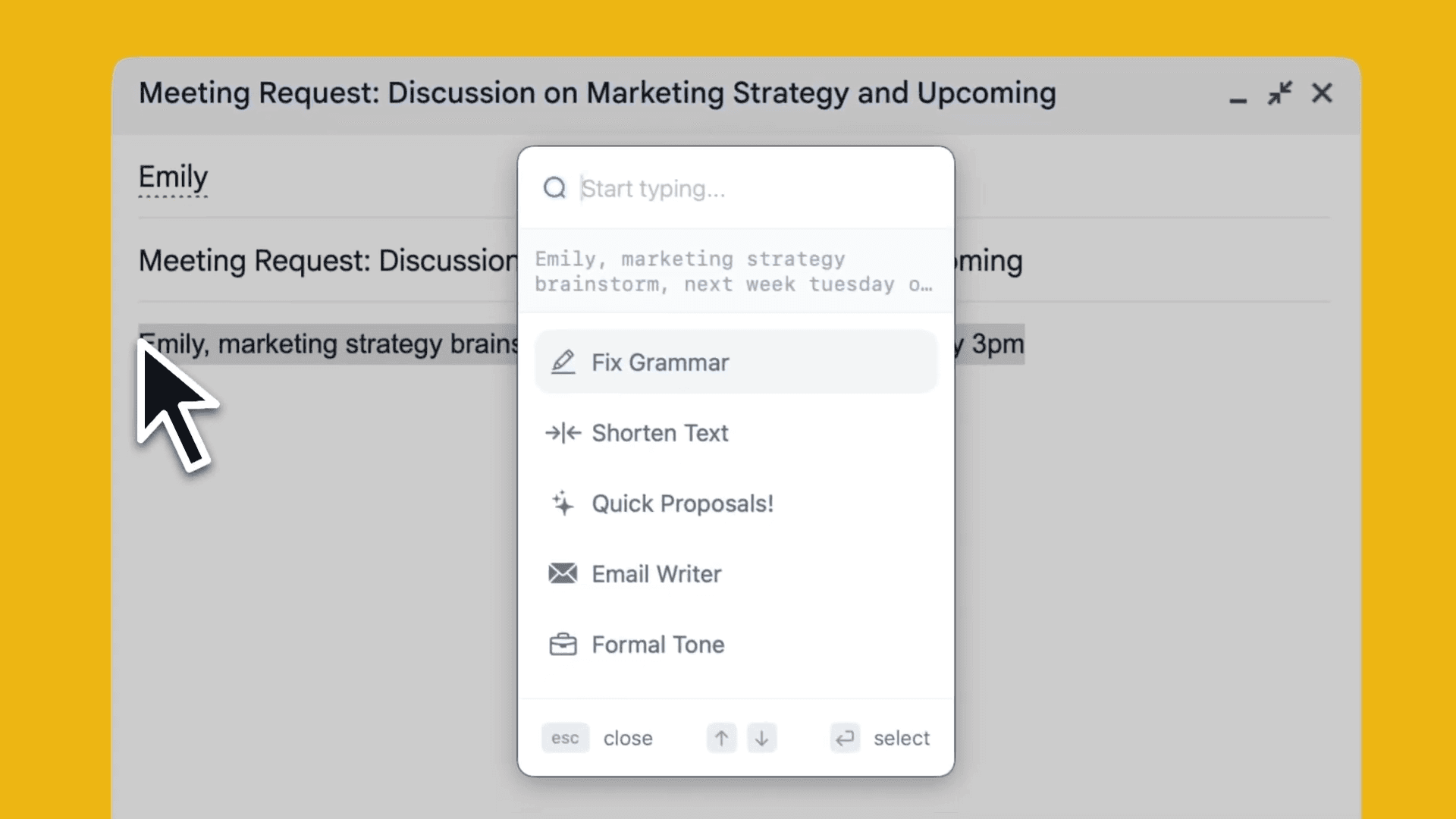
TypoTab also helps with repetitive work. You can automate common writing tasks like rewriting pitches, cleaning notes, or structuring ideas. Since it works across all apps, it saves time every day. For marketers who care about speed, clarity, and focus, TypoTab is a simple but powerful writing companion.
3. Memelord (for meme marketing and social reach)
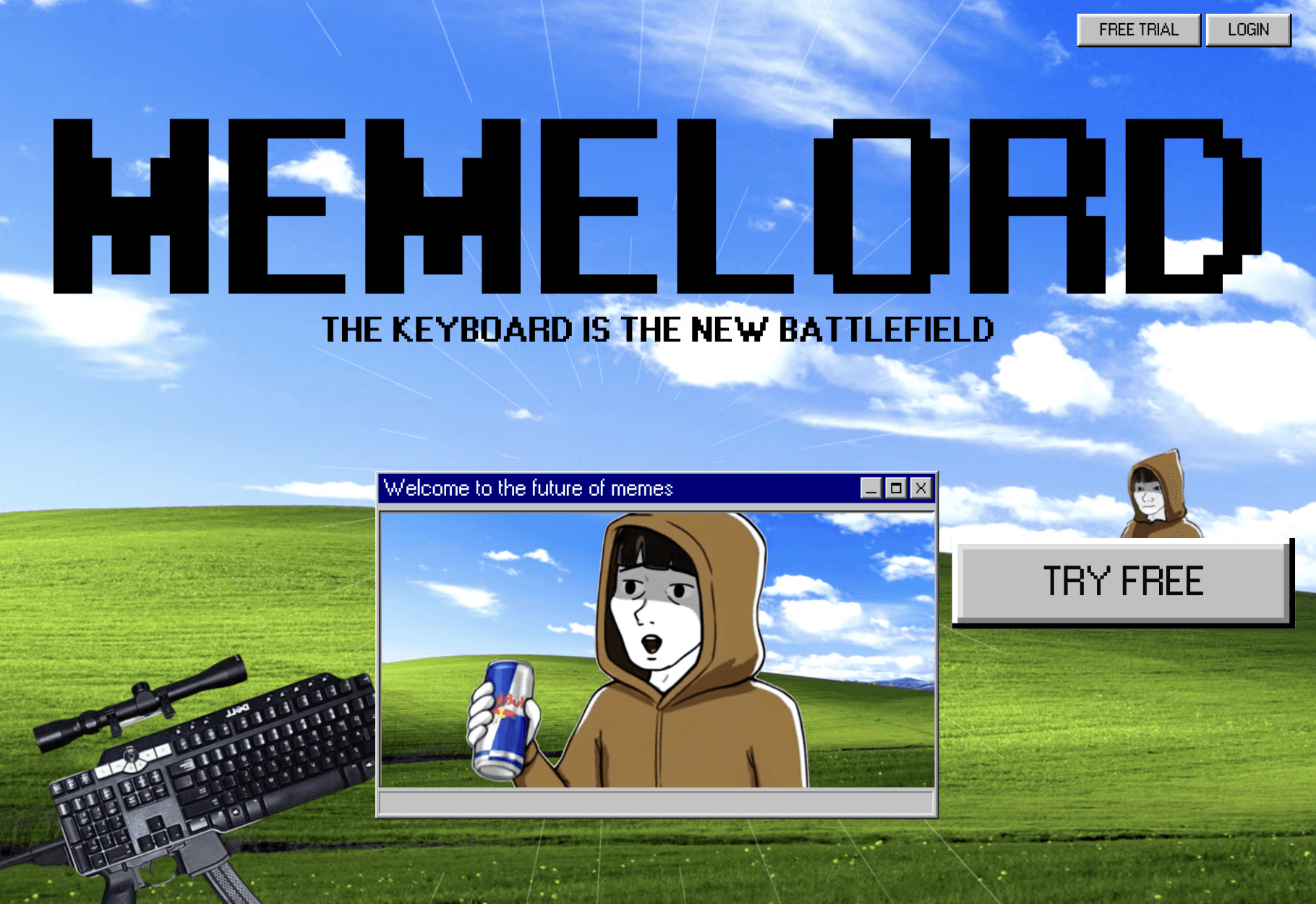
Memelord is an AI-powered meme and video tool built for fast, reactive marketing. It helps brands and marketers create memes that match what is trending right now.
You get alerts for new memes through email, SMS, or Telegram, so you can act while the trend is still hot. This matters on platforms like X, LinkedIn, and Instagram, where timing decides reach.
Marketers use Memelord to edit memes quickly on an infinite canvas. You can remix classic templates, generate AI memes, remove backgrounds, face-swap, and create short videos or full meme-based clips.
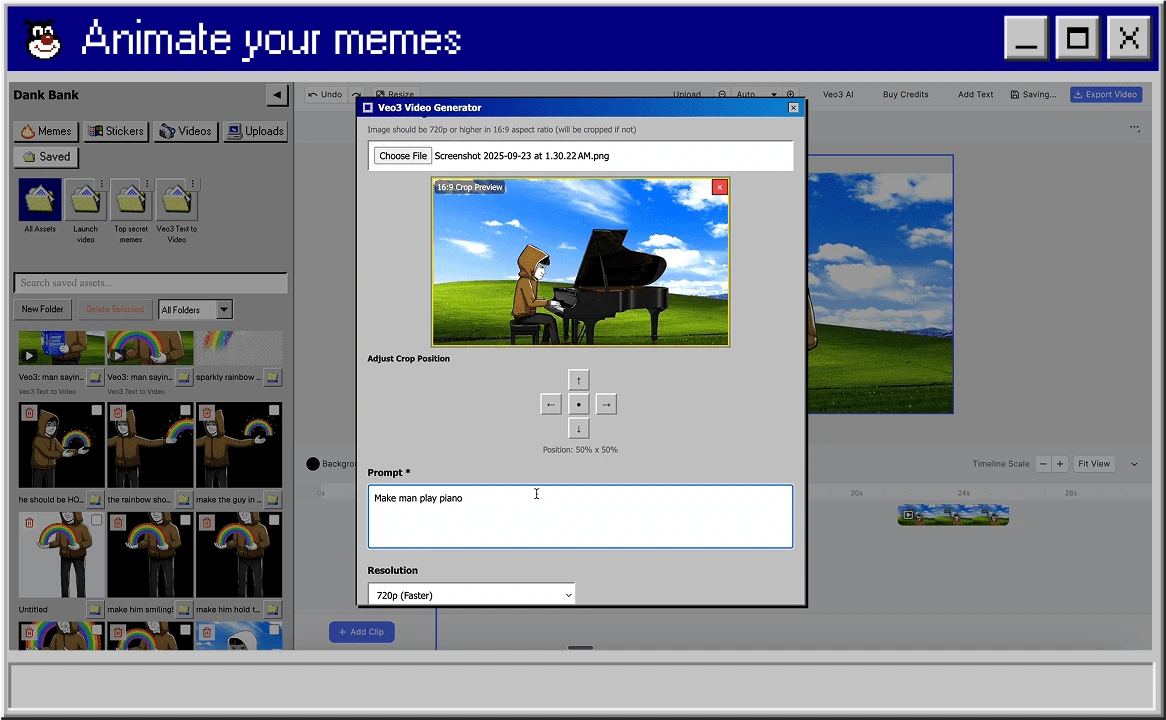
The built-in video editor lets you animate memes instead of posting static images. This helps brands stand out in crowded feeds.
Memelord also works well for teams. You can collaborate, manage meme folders, and scale output without slowing down. For growth marketers, social media managers, and brand teams, Memelord turns memes into a repeatable marketing channel instead of a one-off idea.
4. Surfer SEO (for ranking content in Google and AI search)
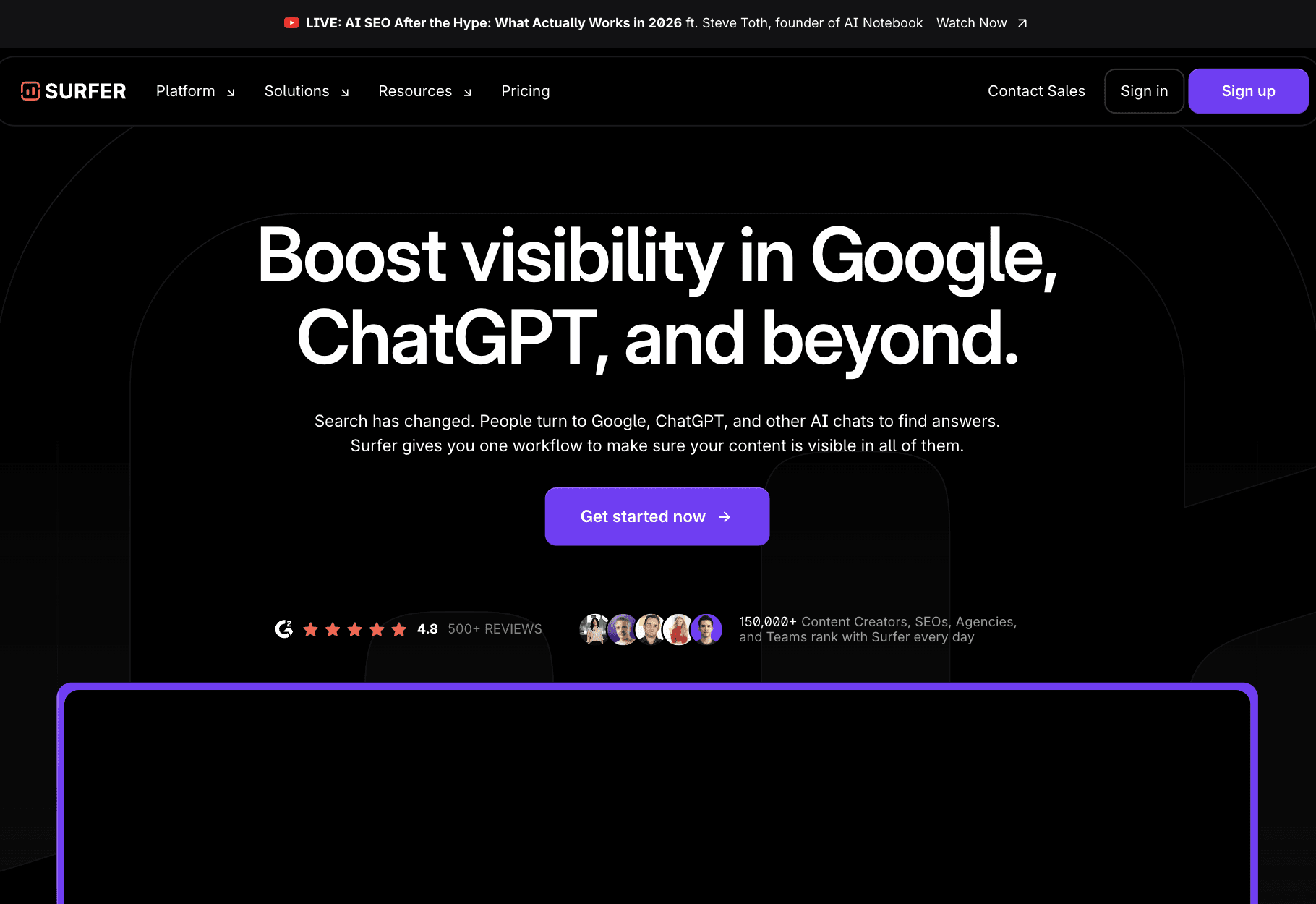
Surfer SEO helps you write content that ranks. It shows you exactly what top-ranking pages do right and guides you to match that standard. While you write, Surfer scores your content based on structure, keyword use, readability, headings, and topical coverage. You see what to fix in real time, not after publishing.

Marketers use Surfer to remove guesswork from SEO. You choose a keyword, and Surfer analyzes the search results to suggest an outline, important topics, internal links, and content length. It also helps optimize for AI answers from tools like ChatGPT by focusing on entities and context, not just keywords.
Surfer SEO works well for teams that publish at scale. Writers, editors, and SEO managers can collaborate in one editor, generate briefs fast, and keep quality consistent. If organic traffic matters to your business, Surfer helps you publish content that search engines and AI tools actually pick up.
5. Claude (for strategy, thinking, and deep marketing work)
Claude is an AI assistant built for thinking, not just writing. Marketers use it to break down complex problems, plan strategies, analyze data, and improve decisions. It works well when tasks need structure, logic, and clear reasoning, not quick copy alone.
Claude is useful for marketing strategy, research, positioning, and long-form content planning. You can upload documents, briefs, spreadsheets, or notes and ask Claude to analyze them.
It helps with campaign planning, customer research, SEO strategy, messaging frameworks, and competitive analysis. Many marketers use it as a second brain for thinking through ideas before execution.
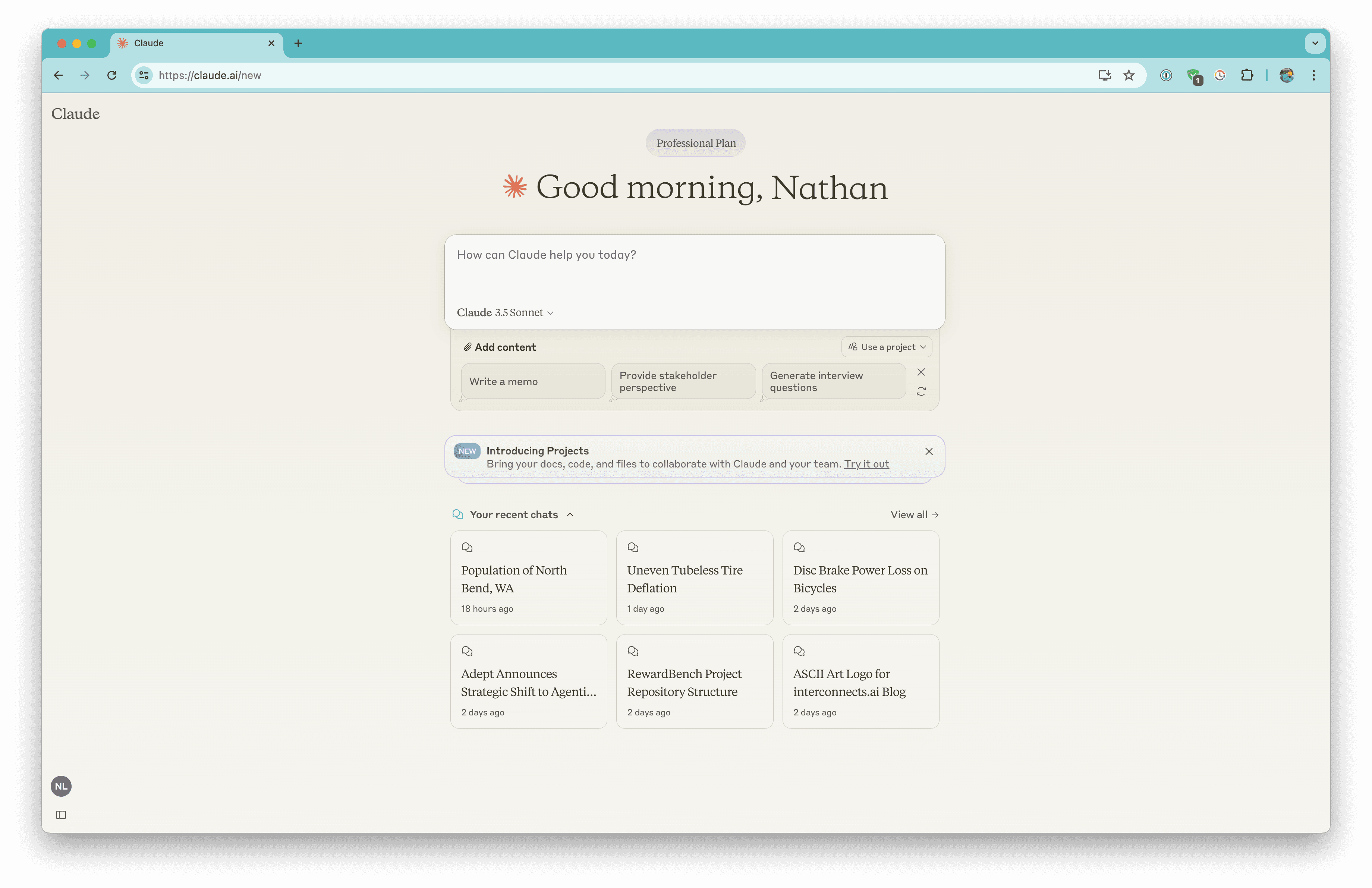
Compared to other AI tools, Claude shines at clarity and depth. It explains concepts step by step and challenges weak assumptions. For marketers who need help thinking, not just producing words, Claude is a strong partner for serious work.
6. Reply.io (for AI-powered outbound and lead generation)
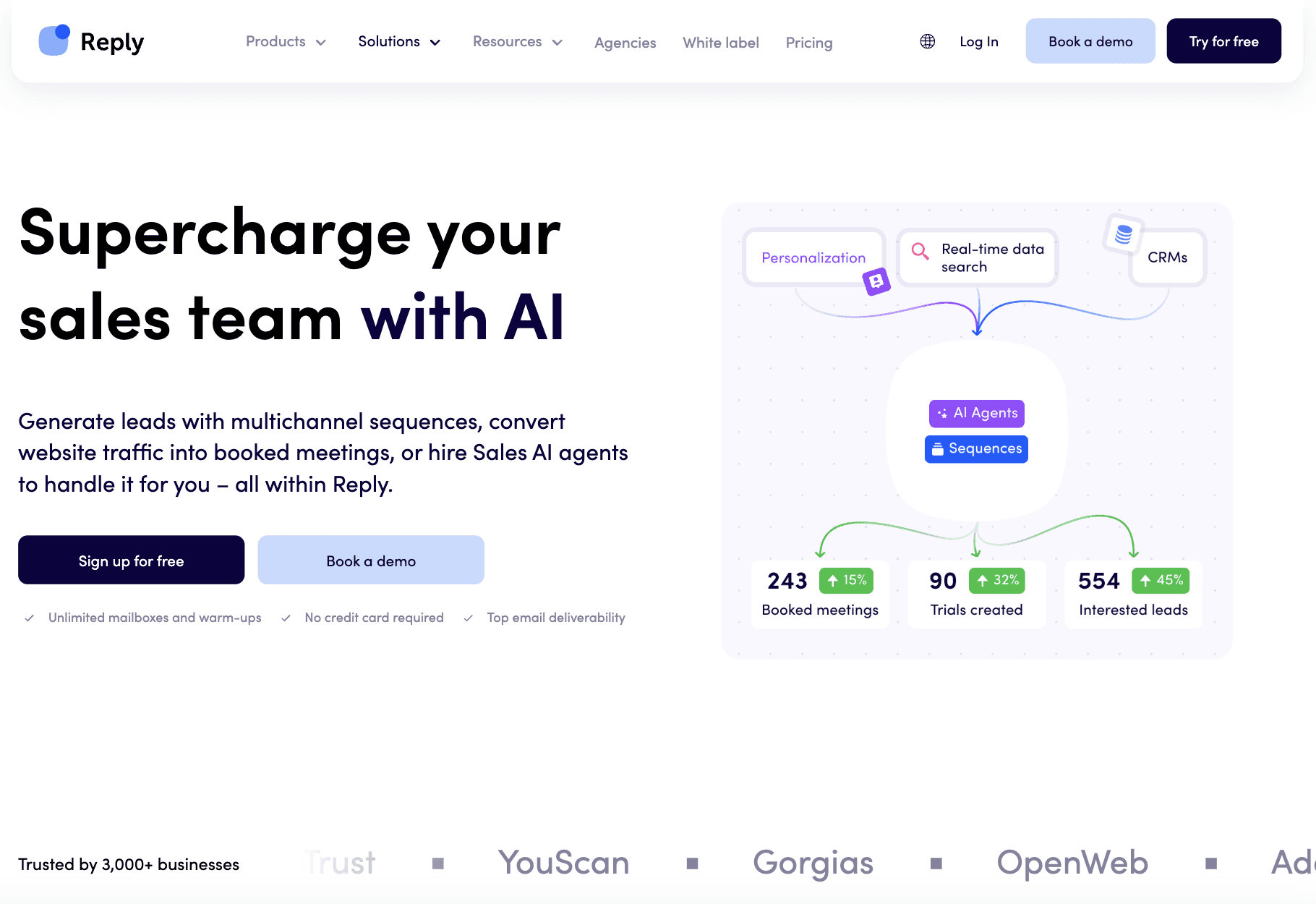
Reply is an AI sales and outreach platform built to help marketers and sales teams generate leads at scale. It combines real-time B2B data, email outreach, LinkedIn automation, and AI-driven personalization in one workflow. Instead of juggling tools, teams can find prospects, contact them, and book meetings from a single platform.
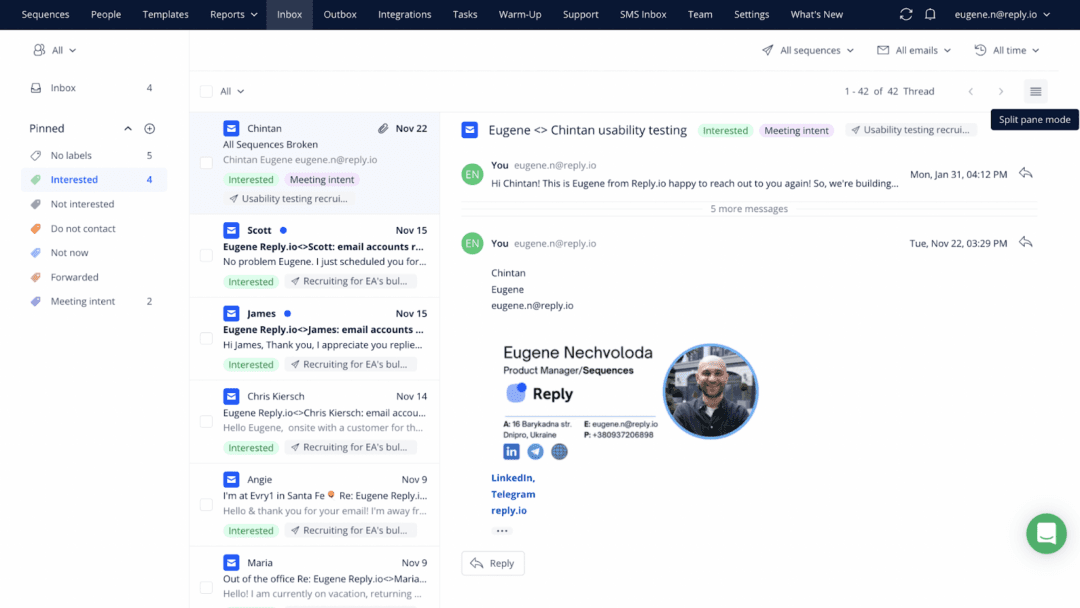
Marketers use Reply to run multichannel campaigns across email, LinkedIn, calls, SMS, and WhatsApp. Its AI helps suggest audiences, personalize messages, and automate follow-ups without hurting deliverability.
Features like unlimited email warm-ups and inbox health tools help campaigns land in the primary inbox, not spam.
Reply is useful for B2B growth, outbound marketing, and revenue teams. You can run human-led outreach or use its AI SDR agent to handle prospecting and responses for you. If your goal is pipeline growth, booked meetings, and predictable outreach, Reply turns outbound into a repeatable system.
7. Dub (for link tracking and marketing attribution)
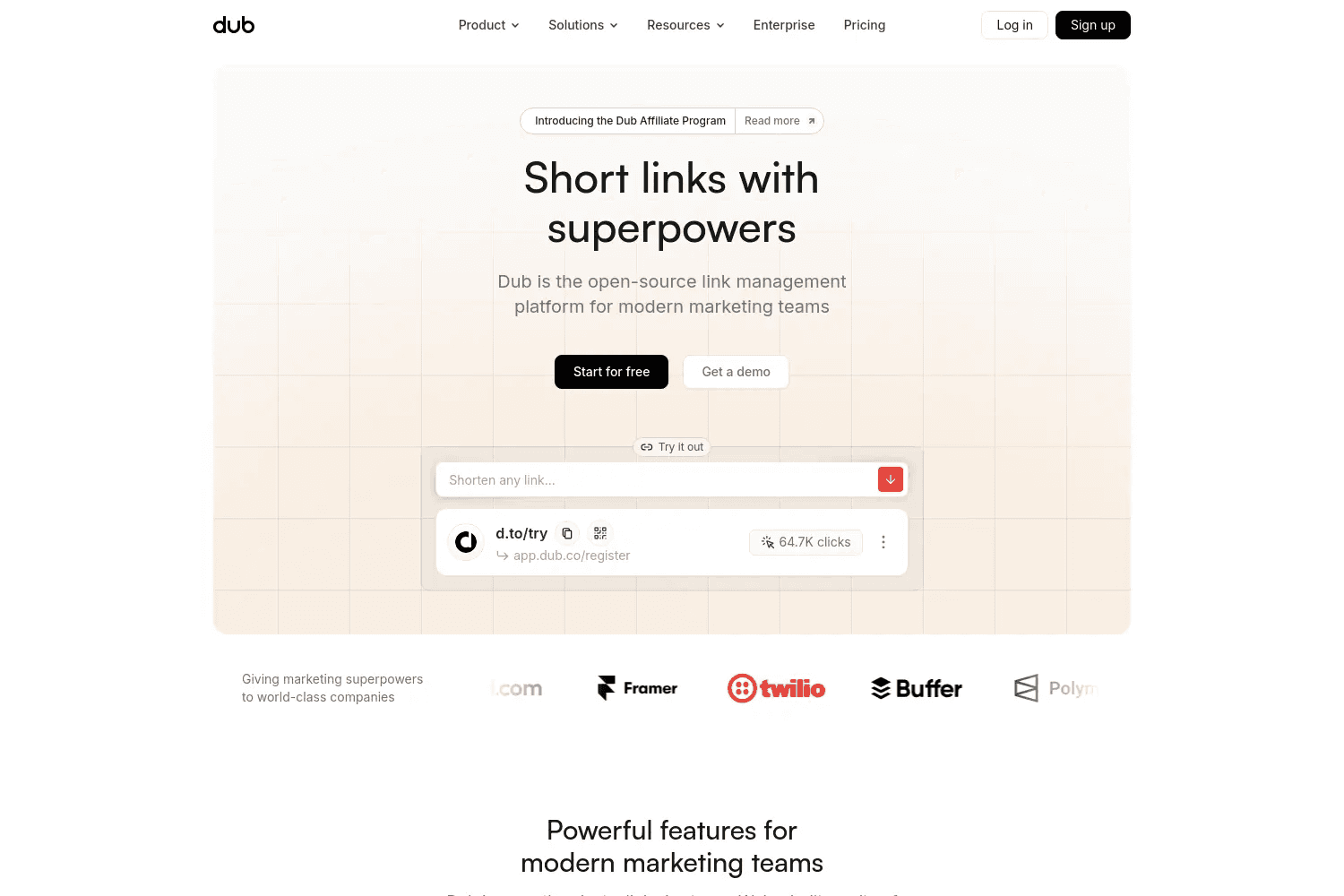
Dub is a modern link management and attribution tool built for marketers who care about outcomes, not just clicks. It helps you create branded short links and track what happens after someone clicks. This includes signups, sales, and revenue. If your marketing depends on links across ads, content, or partnerships, Dub gives you clear visibility into what actually works.
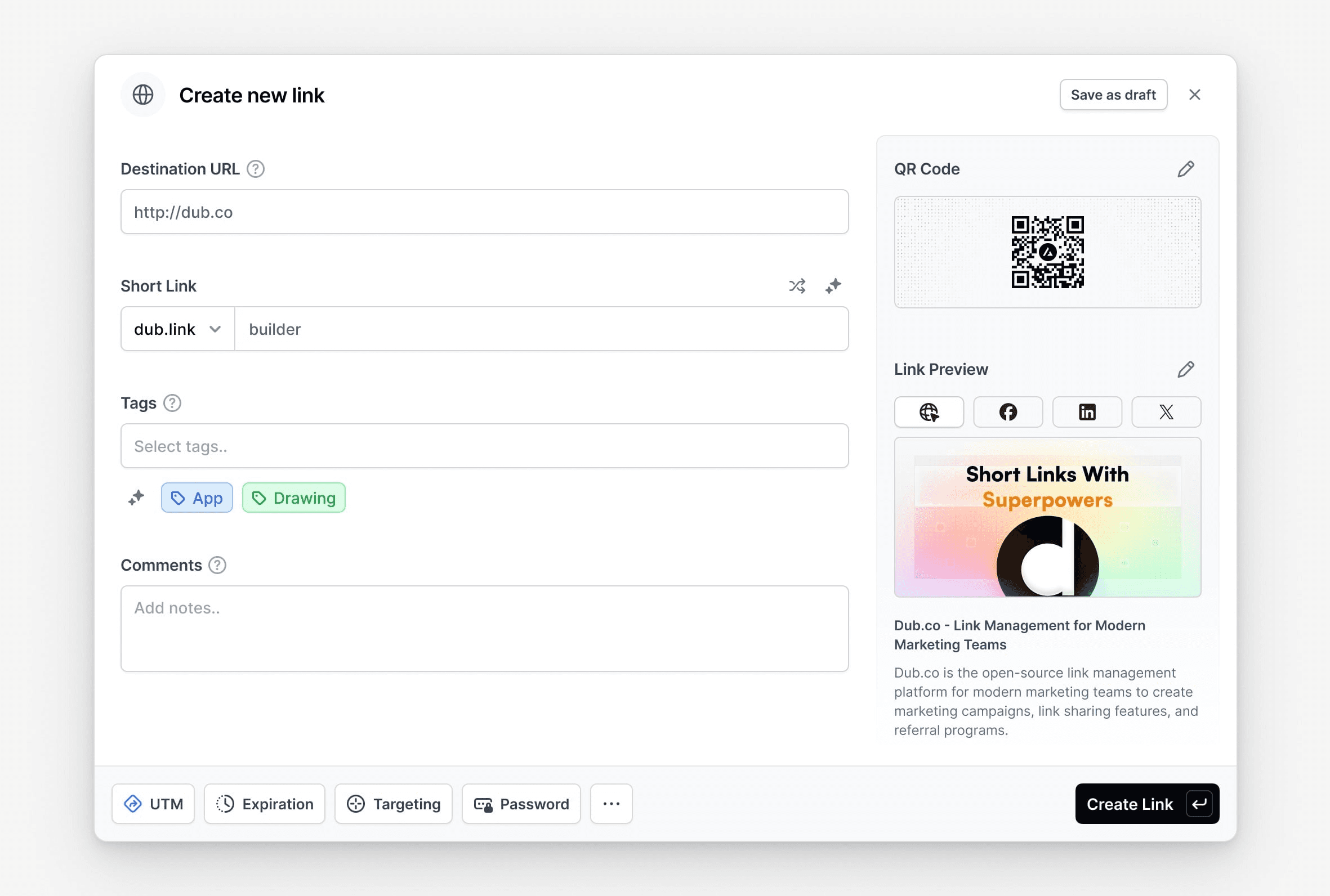
With Dub, you can create short links using custom domains, add UTMs, and control how links behave based on device or location. It also supports deep links, QR codes, and A/B testing. As traffic comes in, Dub tracks every event in real time, from clicks to conversions, so you can measure ROI without guessing.
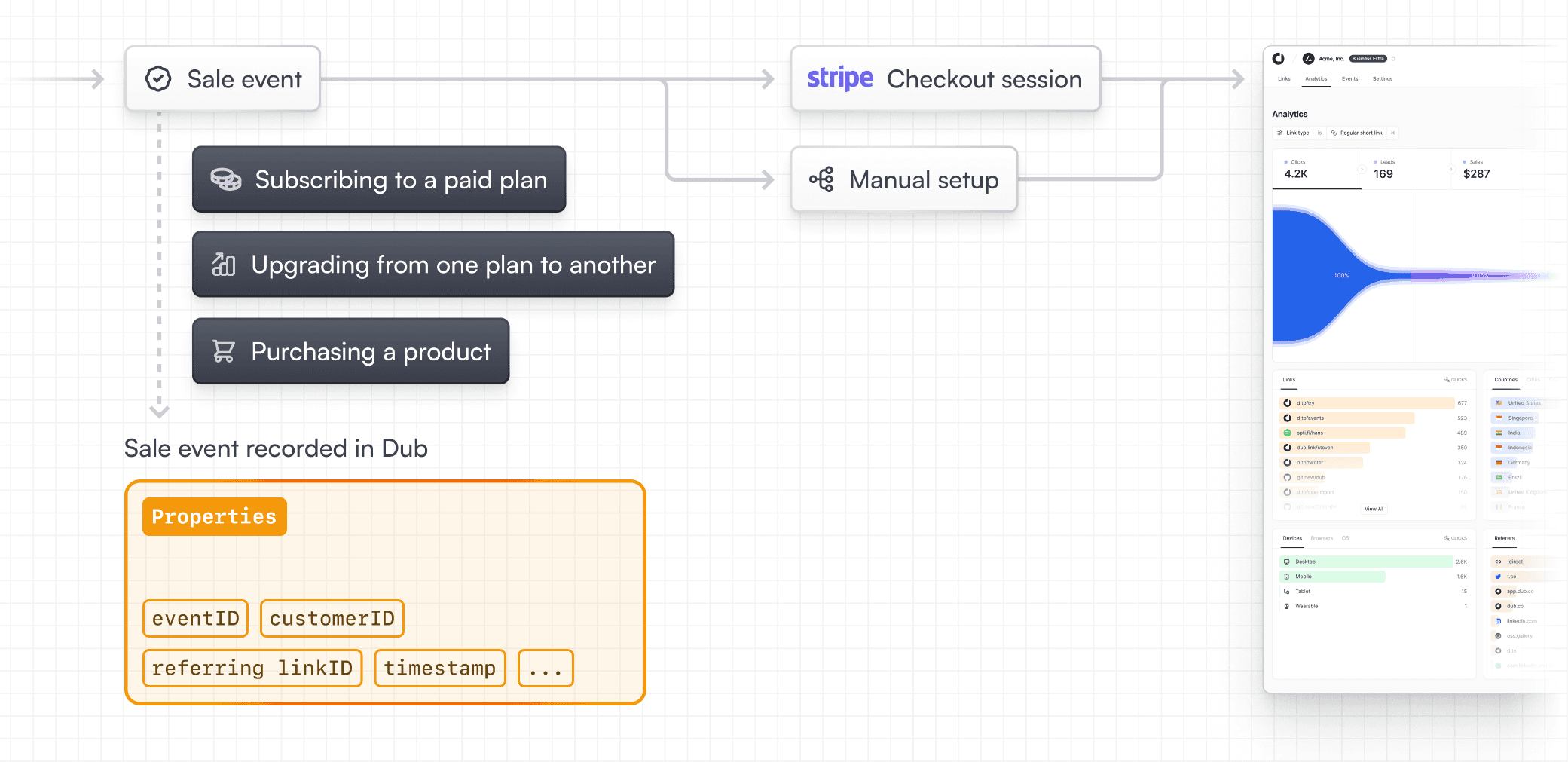
Dub also works well for affiliate and referral programs. You can generate referral links, track partner performance, and automate payouts. Detailed analytics, customer profiles, and integrations with tools like Segment and Google Tag Manager make Dub useful for both small teams and fast-growing companies that need reliable attribution at scale.
Wrapping Up
AI has changed how marketing work gets done. Not by replacing people, but by removing friction. The teams that move faster today are not working harder. They are choosing tools that reduce manual effort, surface better insights, and help them act with confidence.
The real advantage comes from intent, not volume. When AI tools are used to solve clear problems, they improve focus, speed, and results. When they are added without purpose, they only add noise. The goal is clarity. Better decisions. Better output. Less wasted time.
If you want to explore more high-quality marketing tools, you can check out a curated collection on Toolfolio.
You can also browse more resources, guides, and tool breakdowns to keep improving your marketing stack and skills:
You May Also Like












Featured Tools

Newest Additions










AI Image & Video Generation












Vibe Coding Library
























Screenshot & Screen Recording Tools