



7 Best Lovable Alternatives (2026)
A curated list of the best Lovable alternatives, covering powerful AI website builders that help you design, launch, and scale faster without coding.

Dudu
Mar 27, 2026
Last Updated Mar 27, 2026
Image Credit: Toolfolio
Lovable helps you build apps and websites with AI. You describe what you want, and it generates a working product.
But it is not for everyone.
You may feel limited once your project grows. You may want more control over design, code, or integrations. Some users find pricing restrictive. Others need better performance, flexibility, or team features.
That is why people start looking for Lovable alternatives.
They want tools that are faster, more flexible, or better suited for real production work. Some want simple no-code builders. Others want full control with AI support. The needs are different, but the goal is the same. Build better, faster, and with fewer limits.
In this guide, we break down the best Lovable alternatives you can use today. We focus on tools that help you build apps and websites with less friction, better control, and clearer results.
What is Lovable?
Lovable is an AI app builder that turns your ideas into working web apps. You write a simple prompt. Lovable generates the frontend, backend, database, and auth. Then it deploys your app with one click.
It is built for speed. You can go from idea to live product in minutes without writing code.
Lovable also includes key features out of the box. It connects with databases like Supabase. It supports payments with Stripe. It handles login systems, file storage, and deployments. You can even export your code to GitHub if you want more control later.
In simple terms, Lovable helps you build full-stack apps fast without deep technical knowledge.
Pros of Lovable
Very easy to use
You describe what you want. The AI builds it. No steep learning curve.Fast prototyping
You can test ideas quickly and launch basic apps in minutes.All-in-one setup
Frontend, backend, database, and deployment are handled in one place.Good for non-developers
You can build working apps without knowing how to code.Automation saves time
Tasks like database setup and integrations happen automatically.
Cons of Lovable
Not ideal for public production apps
Apps may lack strong security checks. You often need a developer to review before going live.Limited control as you scale
Customization, performance tuning, and complex logic can become difficult.Pricing and credit system
Many users find the pricing unclear or expensive, especially in early stages.AI inconsistency
Prompts can fail or give incorrect outputs, leading to wasted time and credits.Code quality issues
Bugs, poor structure, and integration problems can appear in generated apps.
When Lovable makes sense
Lovable works best when you are building for yourself, testing ideas, or creating internal tools. It is useful for quick prototypes and early-stage projects.
For production apps that users depend on, you often need more control, better security, and cleaner code. That is where Lovable alternatives become important.
Best Lovable Alternatives
1. Replit
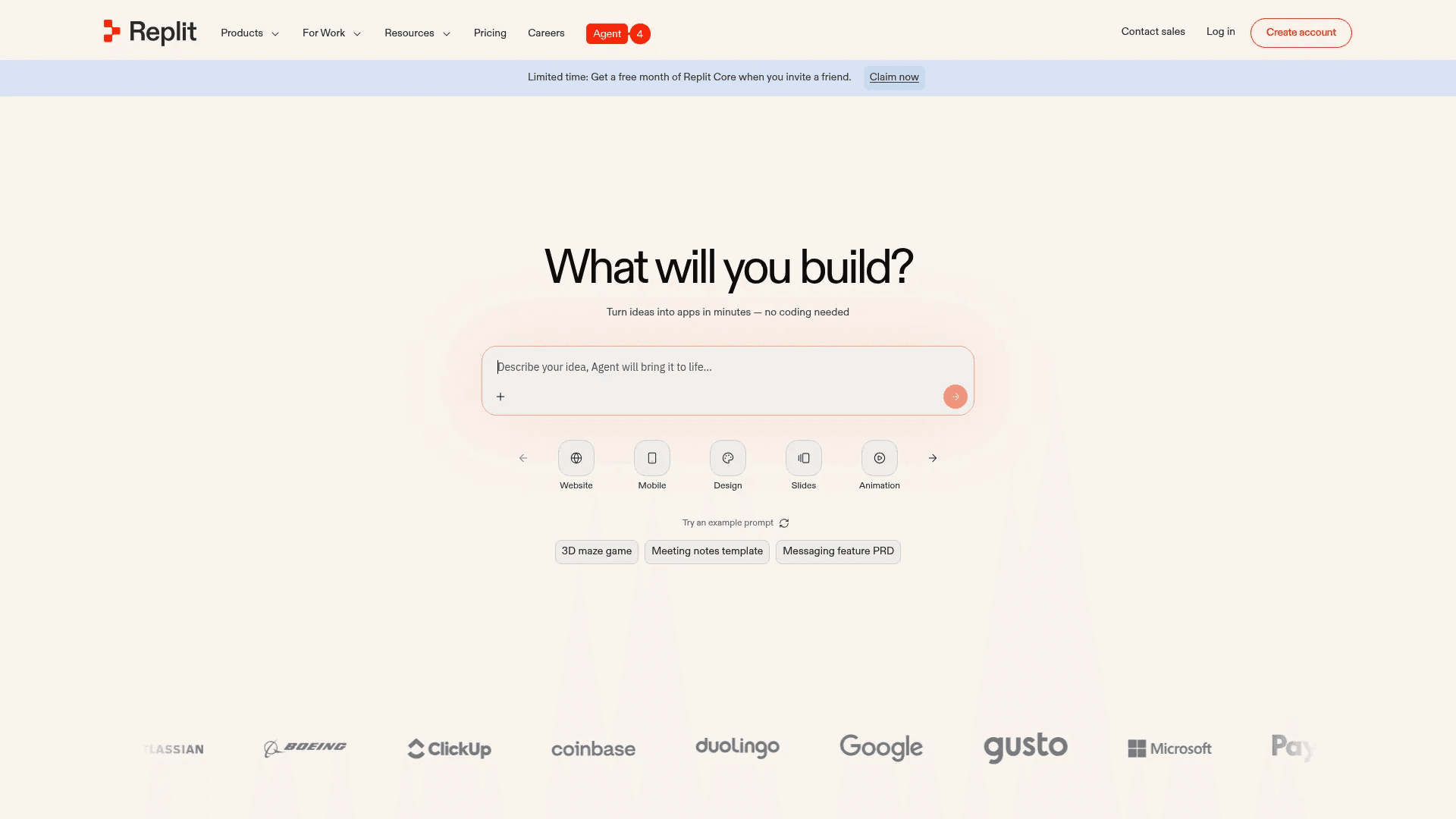
Replit is a browser-based coding platform that helps you build apps using AI. You can describe your idea, and its AI Agent can generate a working full-stack app. It runs fully in your browser, so you can build, test, and deploy without setting up anything on your system.
It is a strong Lovable alternative if you want more control. Unlike Lovable, Replit is not fully no-code. You still interact with code, but the AI reduces most of the heavy work. It also supports real-time collaboration, which makes it useful for teams or solo founders building SaaS products.
Replit stands out for speed and flexibility. You can prototype fast, connect APIs, and scale projects over time. It includes built-in hosting, database support, and integrations, so you can ship apps directly from the same place.
Pricing starts with a free plan that gives limited AI credits and lets you publish one app. The Core plan costs $17 per month and includes $20 in credits, more collaboration, and longer builds. The Pro plan costs $95 per month and gives higher credits, better models, private deployments, and premium support.
The main advantage of Replit is speed and control. You can build real apps, not just prototypes, and scale them over time. It works well for developers or semi-technical users who want flexibility. However, it is not ideal for complete beginners since it still involves code. Costs can also increase quickly as you use more AI credits, and lower plans may struggle with performance on bigger apps.
2. Anything
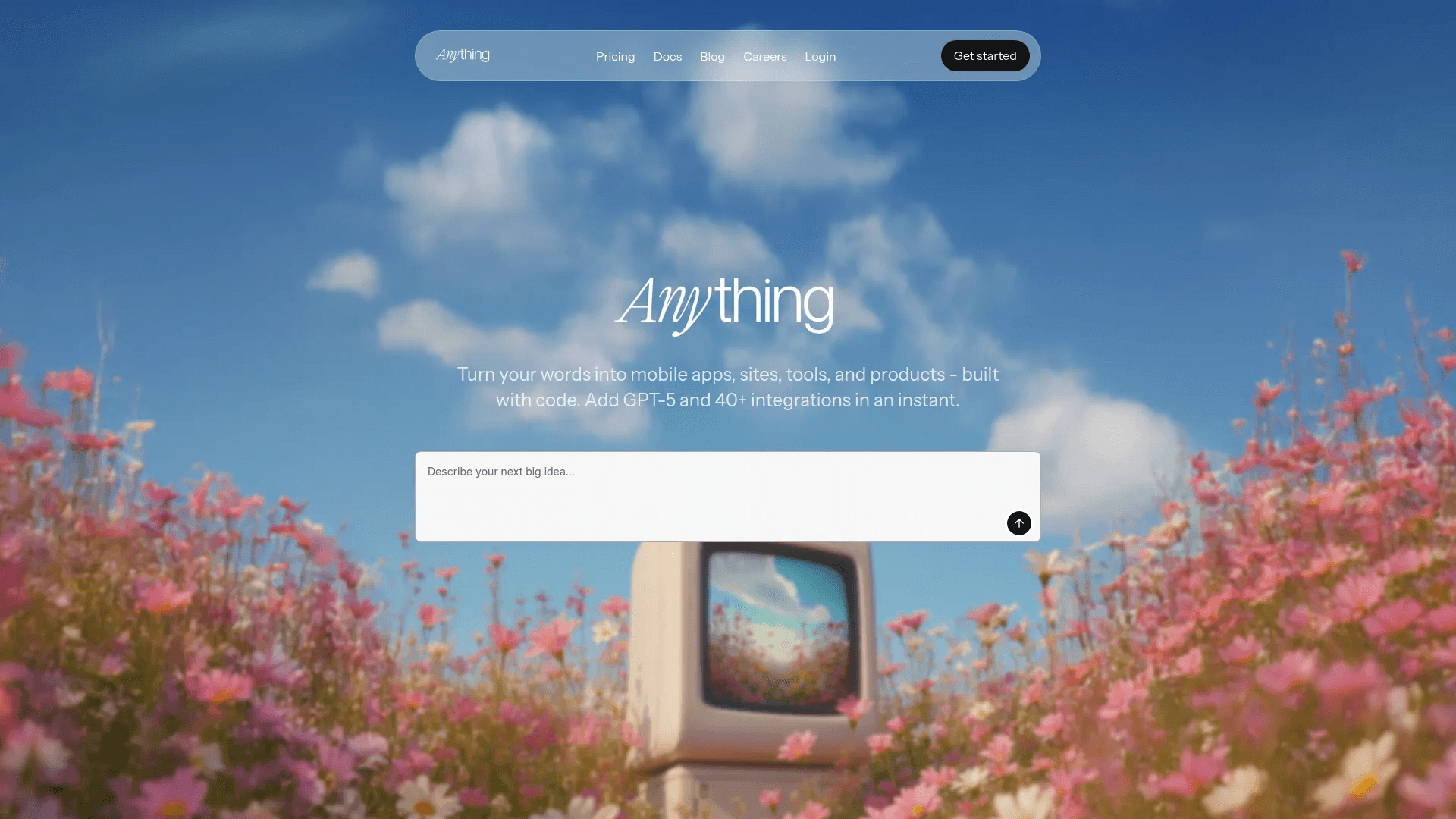
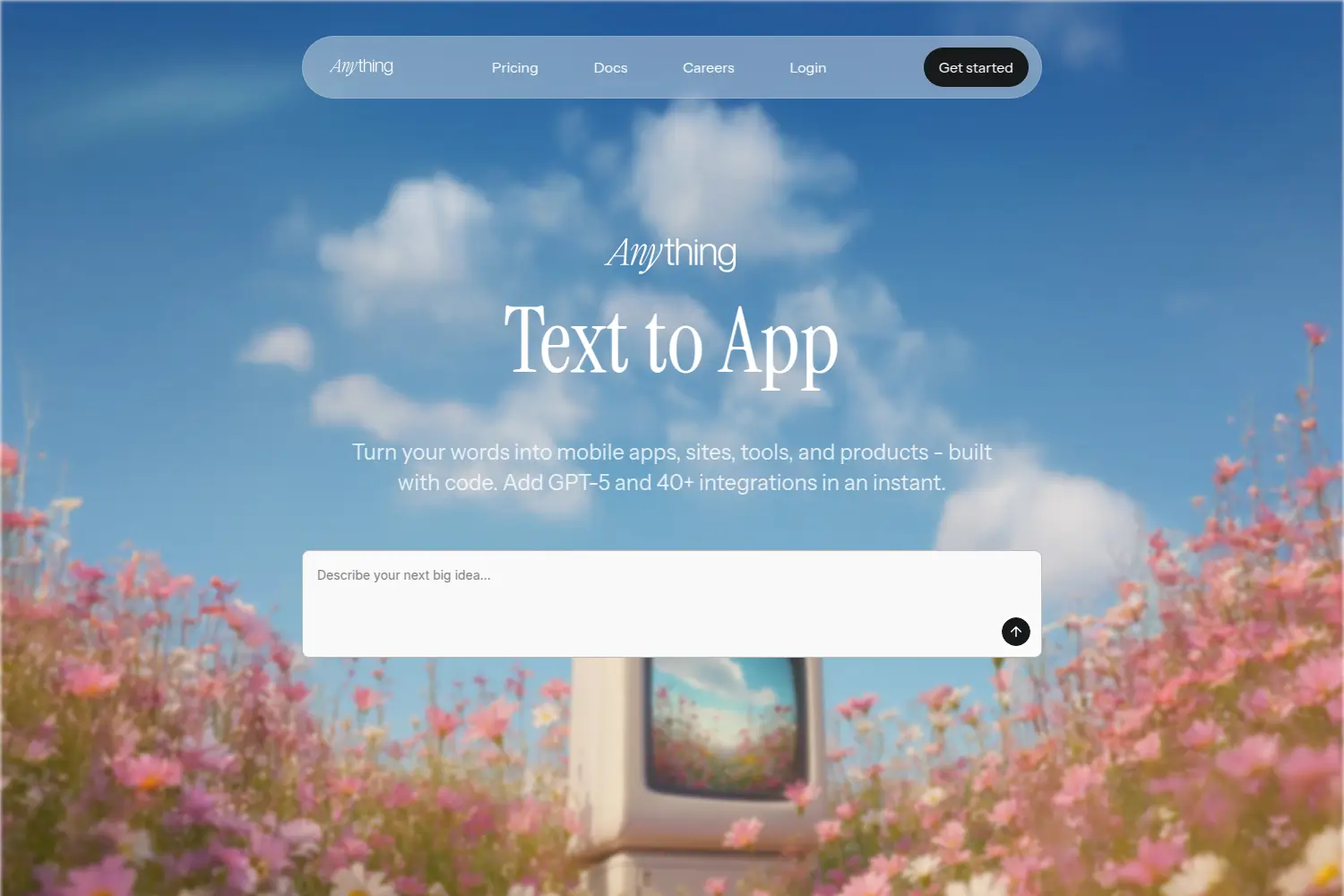
Anything is an AI app builder that turns simple prompts into full apps. You describe your idea, and it builds web apps, mobile apps, and tools with real code. It handles frontend, backend, database, authentication, and even payments without setup.
It is a strong Lovable alternative if you want a more complete “all-in-one” builder. You do not need to touch code at all. It also supports multiple AI models like GPT, Claude, and Gemini in one place, along with 100+ integrations. You can build once and launch across web and mobile with the same backend.
Anything focuses on speed and automation. It can test your app, detect errors, and even fix issues on its own. This makes it useful for non-technical users who want to launch real products, not just prototypes.
Pricing starts at a free plan with 3K monthly credits and basic features. The Pro plan costs $19 per month and gives 20K credits, private projects, custom domains, and removes branding. The higher plan costs $199 per month and offers up to 220K credits, better AI models, multiple agents, automated testing, and priority support.
The main advantage of Anything is simplicity and power combined. You can build full apps without code and launch on multiple platforms quickly. However, results depend heavily on how well you write prompts. Complex features may still need manual fixes or technical input. Pricing can also feel unclear at times, and basic plans may limit control or code access.
3. Bolt (Bolt.new)
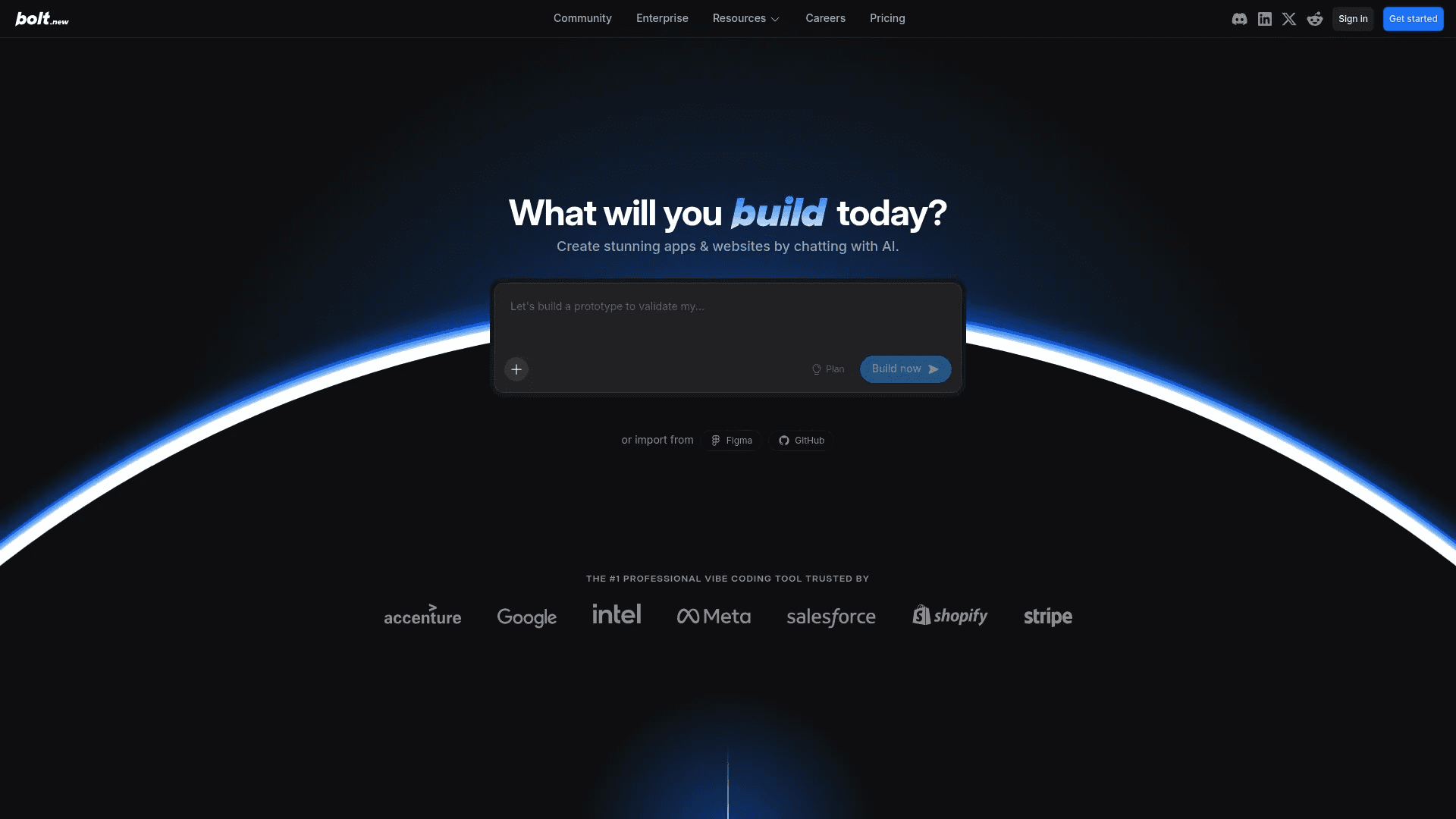
Bolt is a browser-based AI coding tool that helps you build full-stack apps using prompts. It works inside a visual interface and supports modern frameworks like React and Next.js. You can generate code, edit it, and deploy apps without setting up a local environment.
It is a good Lovable alternative if you want more control while still using AI. Bolt gives you full access to code, unlike many no-code tools. It also includes built-in hosting, databases, SEO tools, and integrations, so you can build and launch from one place.
Bolt focuses on reducing errors and handling complex projects. It can automatically test, refactor, and improve your app while you build. It also supports larger projects with better context handling, which makes it more reliable than simple AI builders.
Pricing starts with a free plan that includes basic usage limits, hosting, and branding. The Pro plan costs $25 per month and removes branding, increases token limits, supports custom domains, and improves performance. The Teams plan costs $30 per user per month and adds collaboration controls and team management features.
The main advantage of Bolt is control and scalability. You can build real apps with proper structure and grow them over time. It also reduces errors with built-in testing. However, token usage can become expensive, especially when debugging or building complex features. It also focuses only on web apps, not native mobile, and still requires some technical understanding.
4. v0 by Vercel
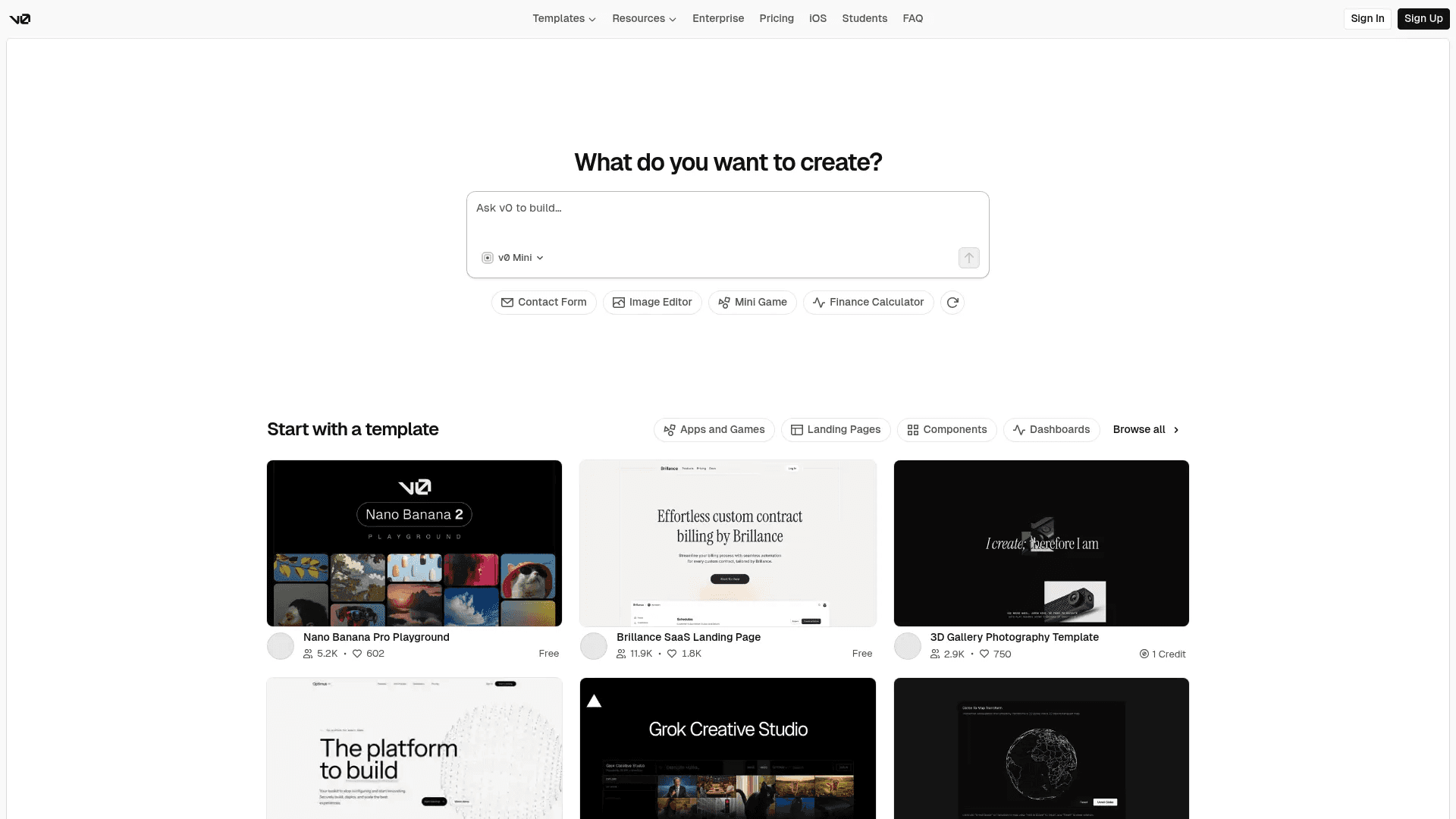
v0 is an AI tool focused on building frontend interfaces quickly. You describe a UI, and it generates clean React or Next.js code. It also deploys directly to Vercel, which makes it very fast to go from idea to live preview.
It is a useful Lovable alternative if your focus is design and frontend. v0 is not a full-stack builder like Lovable. Instead, it helps you create polished UI components and layouts that you can later connect to your backend.
v0 is known for speed and clean output. It generates modern UI with good structure, which developers can easily extend. It also supports features like Figma import and visual editing, which helps in faster design workflows.
Pricing starts with a free plan that includes $5 monthly credits and basic usage with limits. The Premium plan costs $20 per month and offers more credits, higher limits, and better file support.
The main advantage of v0 is high-quality UI generation. It is fast, clean, and reliable for frontend work. However, it is not ideal for building full apps on its own. Backend features are limited, and you often need coding knowledge to complete the product. Credits can also run out quickly if you iterate a lot.
5. Builder.io
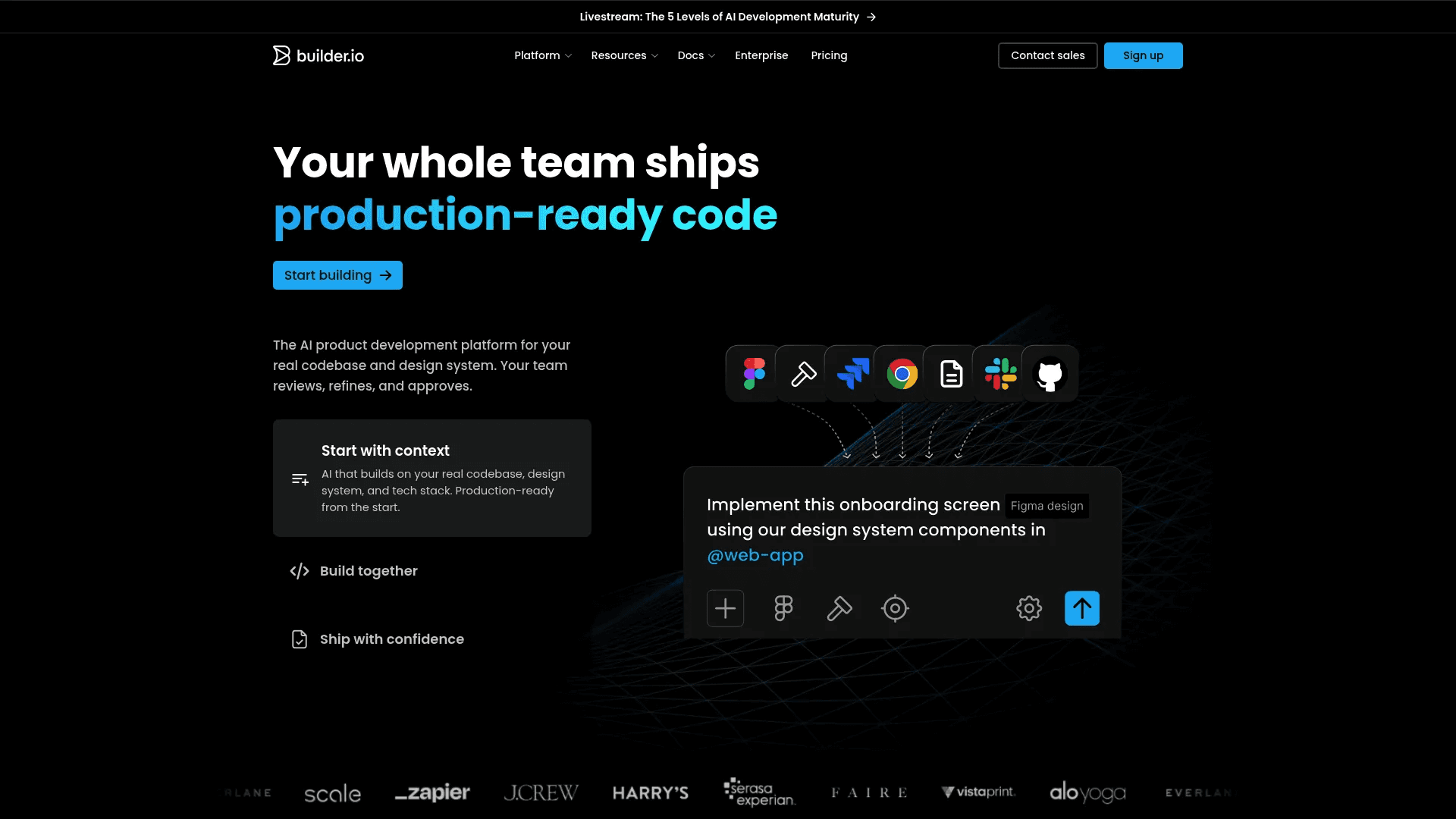
Builder.io is an AI-powered development platform that works with your existing codebase and design system. Instead of generating random apps from scratch, it builds on top of your real product. You can import designs from Figma, connect your GitHub repo, and generate production-ready UI that fits your stack.
It is a strong Lovable alternative if you already have a product and want to move faster. Builder.io focuses more on teams than beginners. It helps product, design, and engineering teams collaborate and ship UI changes without blocking developers. You can build prototypes, update interfaces, and push features without starting from zero.
Pricing starts with a free plan at $0 per user per month with 60 monthly credits and basic access for up to 5 users. The Pro plan costs $24 per user per month and includes 500 credits, credit rollover, activity history, and more advanced features.
The main advantage of Builder.io is control and real-world usage. It works with your actual code, not isolated prototypes, and helps teams ship faster. However, it is not beginner-friendly. You need an existing workflow, and it is less useful if you want to build apps from scratch without technical knowledge.
6. Base44
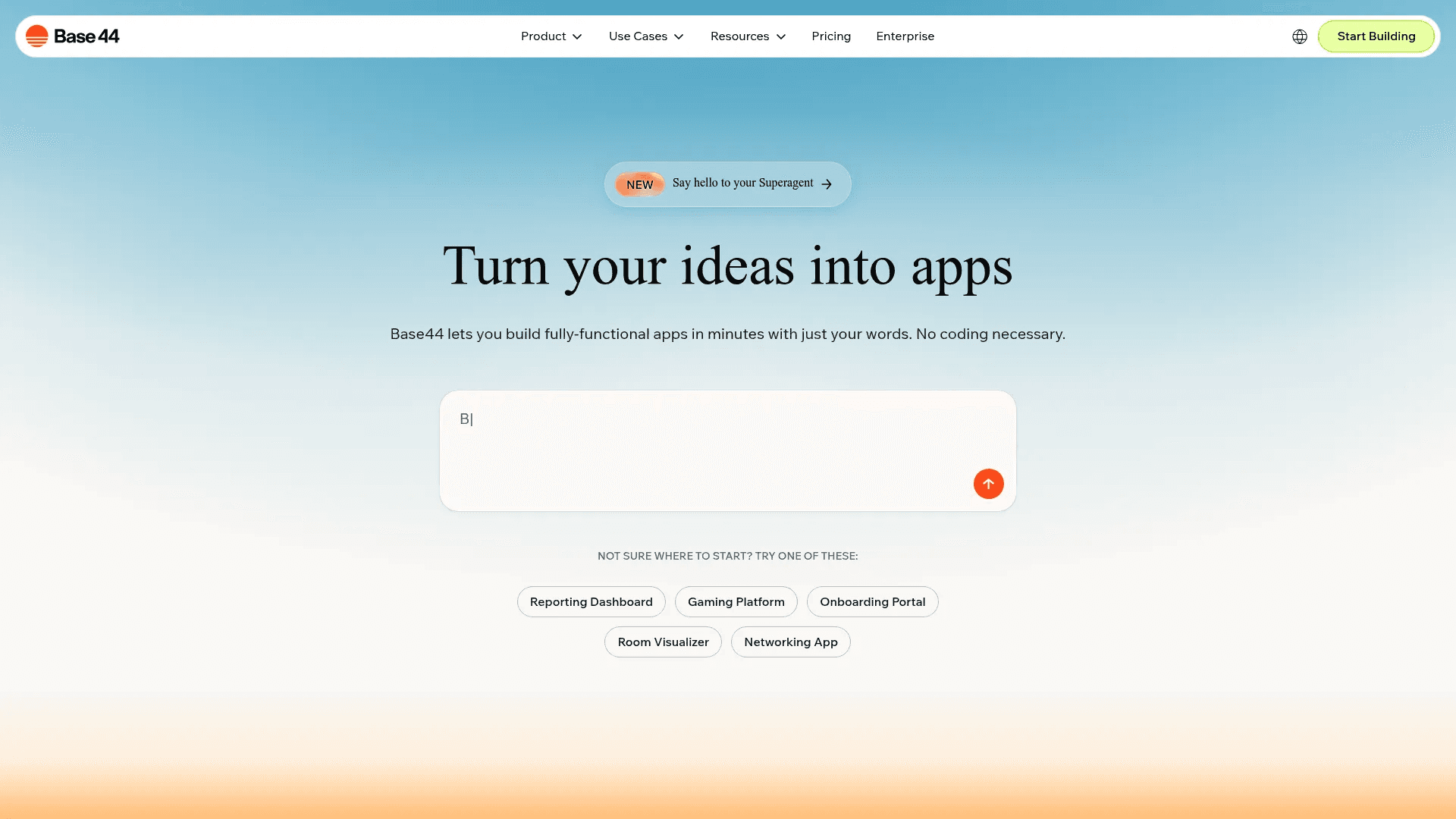
Base44 is a no-code AI app builder that turns your ideas into fully working apps using simple prompts. You describe what you want, and it creates the frontend, backend, database, and logic automatically. It also includes hosting, authentication, and integrations by default.
It is a strong Lovable alternative if you want a simple, all-in-one builder without touching code. Base44 focuses on speed and ease. It sets up everything behind the scenes, so your app works out of the box. You can build tools, dashboards, portals, or even full products without technical setup.
Pricing starts with a free plan that includes basic credits for small projects. The Starter plan costs $25 per month and gives more message and integration credits. The Builder plan costs $50 per month and adds more credits, backend functions, domain support, and GitHub integration.
The main advantage of Base44 is simplicity. You can go from idea to working app very fast without worrying about infrastructure. However, like most AI builders, output depends on your prompts. Complex apps may need manual edits, and you may feel limited if you want deep customization or control.
7. Glide
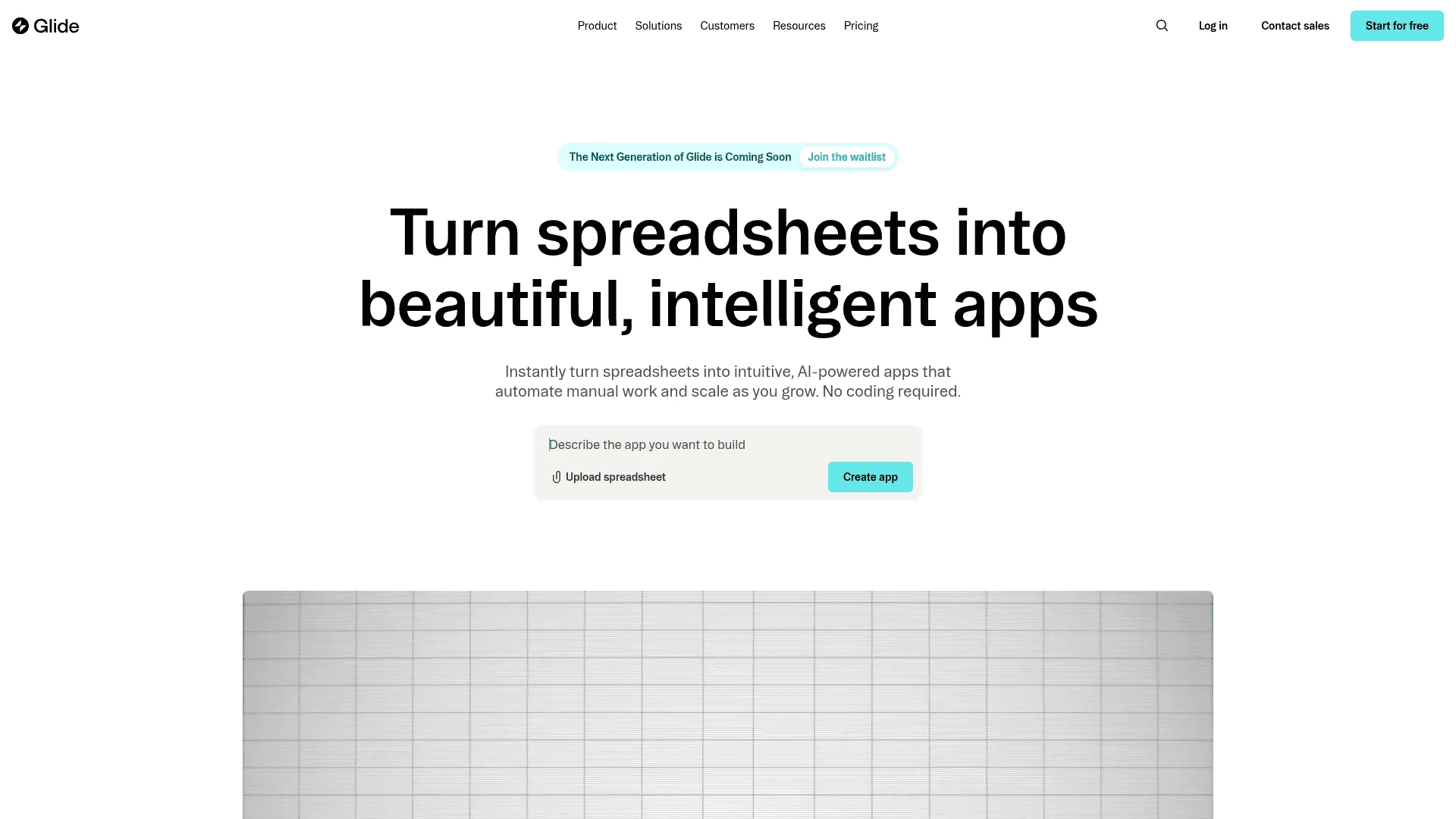
Glide is a no-code platform that turns spreadsheets into apps. You connect data from Google Sheets, Excel, or Glide’s own tables, and it builds a working app on top of it. It is widely used for internal tools, dashboards, and business apps.
It is a good Lovable alternative if your focus is business tools, not full custom apps. Glide is simple and structured. You build apps using data, workflows, and pre-built components instead of prompts alone. It also includes automation, AI features, and integrations to handle real workflows.
Pricing starts with a free plan that supports basic usage, one editor, and limited data. The Business plan starts at $199 per month and includes more users, higher data limits, workflows, API access, and integrations.
The main advantage of Glide is reliability and structure. It is easy to build stable apps for real business use without bugs or AI errors. However, it is less flexible than Lovable or other AI builders. You cannot build highly custom apps, and pricing becomes expensive as your usage grows.
Best Lovable Alternatives Compared: Features, Pricing, and Use Cases Table
Tool | Best For | Pricing (USD) | Key Strength | Main Limitation |
|---|---|---|---|---|
Replit | Developers and semi-technical founders | Free, $17/mo, $95/mo | Full control with AI + real coding environment | Requires coding knowledge, costs can scale with usage |
Anything | Non-technical users building full apps fast | Free, $19/mo, $199/mo | Build web + mobile apps with zero setup and strong automation | Output depends on prompts, pricing clarity issues |
Bolt (Bolt.new) | Founders building scalable web apps | Free, $25/mo, $30/user/mo | Strong full-stack control with built-in testing and infra | Token costs increase quickly, web-only |
v0 by Vercel | UI and frontend-focused developers | Free, $20/mo | Clean UI generation with fast deployment | Not full-stack, limited backend features |
Builder.io | Teams working on existing products | Free, $24/user/mo | Works with real codebase and design systems | Not beginner-friendly, not for building from scratch |
Base44 | No-code users building complete apps | Free, $25/mo, $50/mo | Fully automated app building with backend included | Limited deep customization, prompt dependent |
Glide | Business apps from spreadsheets | Free, $199/mo+ | Stable, structured apps with strong data handling | Expensive at scale, limited flexibility |
Wrapping Up
Lovable is a strong starting point. It helps you turn ideas into working apps fast. But as your needs grow, its limits become clear. You may need more control, better performance, or tools built for real production use.
That is where these alternatives come in.
If you want more control and flexibility, tools like Replit and Bolt are better choices. If you want simple, no-code app building, Anything and Base44 make it easy to go from idea to product. If your focus is UI, v0 works well. If you already have a product and team, Builder.io fits better. And if you are building internal tools from data, Glide is a reliable option.
The right tool depends on what you are trying to build.
Start simple. Test fast. Then move to a tool that can support your next stage.
You May Also Like










Featured Tools

Newest Additions











AI Image & Video Generation
















Vibe Coding Library



























Screenshot & Screen Recording Tools